From Biden’s Presidency to the Ukraine War: A Deep Dive into Geopolitical Rivalries

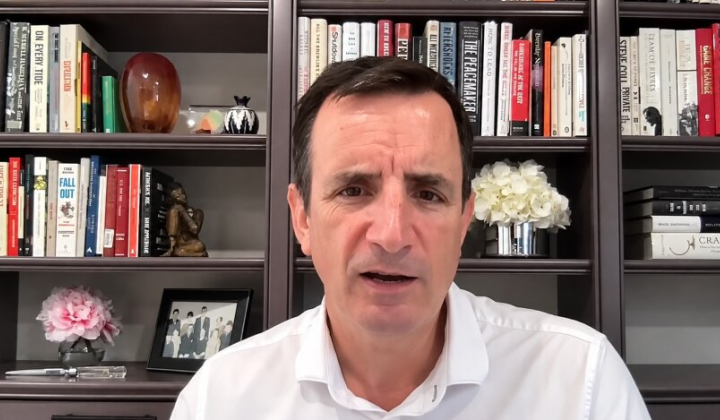
Interview with Thomas Wright
According to ХВИЛЯ: Michael Kimmidge’s interview with Thomas Wright explores the trajectory from the start of Joe Biden’s presidency to Russia’s full-scale invasion of Ukraine, focusing on the evolving geopolitical rivalry, the impact of the COVID-19 pandemic, U.S. policy toward NATO, Europe’s response, and the intelligence efforts leading up to the conflict. Born and raised in Ireland, Wright moved to the U.S. in 2001 for graduate studies and earned his doctorate from Georgetown University. He joined the Brookings Institution in late 2011 and became head of its U.S. and Europe Center in 2017, succeeding Fiona Hill. Wright remained at Brookings until early 2022 before transitioning to the U.S. National Security Council.
Geopolitical Competition Amid a Global Pandemic
In 2017, Wright authored All Measures Short of War, a book examining great power rivalry. The COVID-19 pandemic from 2020 to 2021 intensified geopolitical tensions and complicated international cooperation. Taking office in January 2021, President Biden declared a renewed American engagement with the world. His administration acknowledged that global politics would be shaped largely by competition among major powers, particularly China. Biden prioritized strengthening resilient supply chains, investing in advanced technology and manufacturing, and deepening alliances. However, at the outset of his term, Ukraine was not a central focus for U.S. foreign policy.
Rising Russian military activity near Ukraine in spring 2021 alarmed Washington and prompted a summit between Biden and Putin. While the Biden administration did not seek a new "reset" with Moscow, its primary focus remained on China. During the U.S. transition in 2021, several European nations signed a Comprehensive Investment Agreement with China without consulting Washington. Wright notes that
“the demand to roll NATO forces back to their 1997 positions was too extreme for nearly every major European government.”
Between November 2021 and February 2022, Putin insisted on NATO withdrawing to its pre-1997 footprint. Having already decided to invade, he was prepared to bear significant costs but rejected any U.S. troop presence in Ukraine. In April 2021, Russia was amassing forces near Ukraine, leaving equipment behind even after troop withdrawals. The U.S.-Russia Geneva summit occurred in June 2021. The following month, Putin published an article denying Ukraine’s legitimacy as an independent nation. Wright emphasizes that
“the July article was critically important, revealing Putin’s fixation on Ukraine and his historical narrative.”
The collapse of Afghanistan in 2021 did not deter Putin’s invasion plans. Wright suggests that
“the timing might be linked to COVID-related isolation and Putin’s sense of urgency to complete his project while still in power and vigorous.”
Unlike past crises, the Biden administration publicly disclosed intelligence on Russian plans, carefully balancing the need for transparency with security considerations. In 2022, Putin launched his invasion with the goal of conquering Ukraine.
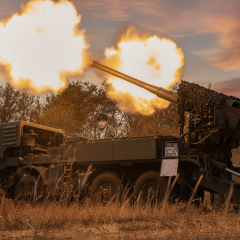
Before February 24, 2022, some European countries, including Germany, underestimated the scale of Russia’s threat. The full-scale invasion marked a decisive turning point, reigniting large-scale war in Europe. Over the 4.5 years of conflict, casualties have reached approximately 1.5 million. Russia maintains close ties with China, India, Brazil, North Korea, and Iran, and its military supplies to partners may affect security dynamics in Asia. Europe has responded by increasing defense spending and demonstrating united support for Ukraine, while the U.S. continues to play a pivotal role in European security and military assistance.
This conversation with Thomas Wright highlights the complexity of global politics amid shifting power dynamics, especially among major states. Russia’s aggressive move into Ukraine not only altered European security but also prompted Western nations to reevaluate defense strategies and international relations. These developments underscore the critical importance of international cooperation and preparedness in facing emerging security challenges worldwide.

Read also