Drones attacked an oil depot in Krasnodar Krai, Russia: a large-scale fire broke out

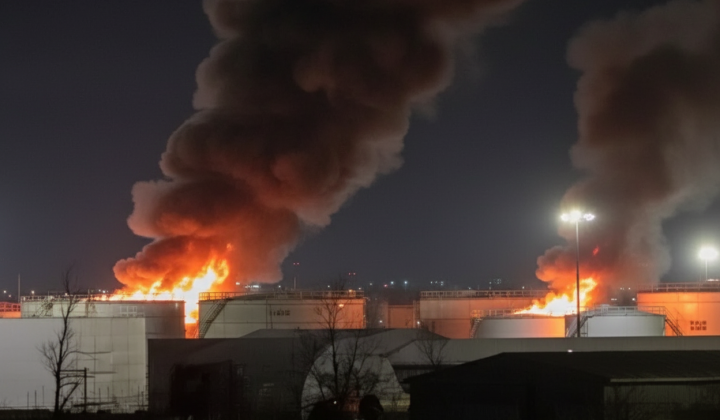
Attack on the oil depot in Armavir
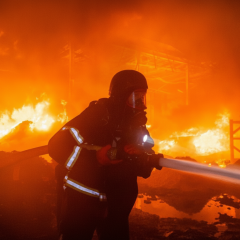
According to Главком: On the night of March 8, drones attacked the oil depot in Armavir, Krasnodar Krai, Russian Federation. The target was ZAO NP NB YNK - South Oil Company's oil accumulation transshipment depot. As a result of the attack, a fire broke out on the territory of the oil depot, and 91 people and 26 units of equipment were involved in extinguishing it.
Series of attacks on facilities in Russia
This attack is part of a series of similar incidents that occurred in Russia during February. On the night of February 22, a series of about ten explosions occurred over the Russian cities of Saratov and Engels, starting around two o'clock in the morning. The highest activity was observed in the southern part of the region.
In addition, on the night of February 12, a military facility in the settlement of Kotluban, Volgograd region, was hit, where an arsenal of the Main Rocket and Artillery Directorate of the Ministry of Defense of the Russian Federation was located. The governor of the Volgograd region, Andrei Bocharov, confirmed the fact of the attack, noting that the fire was caused by the fall of debris. On the same day, explosions were heard in the city of Michurinsk, Tambov region, after which a fire broke out on the territory of the Progress plant. This plant is a strategic defense enterprise, and this is the second time it has become a target of attacks.
Thus, the series of attacks on facilities in Russia raises concerns about the security of strategic infrastructures in the region.
These incidents underscore the rising tensions in the region and the potential increase in threats to the security of key facilities. Such attacks can have significant consequences for Russia's domestic policy as well as its foreign relations, as they undermine trust in the state's ability to protect its infrastructure. Monitoring such events can provide important information for assessing the military situation and strategic risks in the region.

Read also