ScaFi: The Silent Modular Bionic Robotic Fish Successfully Tested Across US Waters

A Propeller-Free, Quiet Robotic Fish Revolutionizing Water Exploration in the US
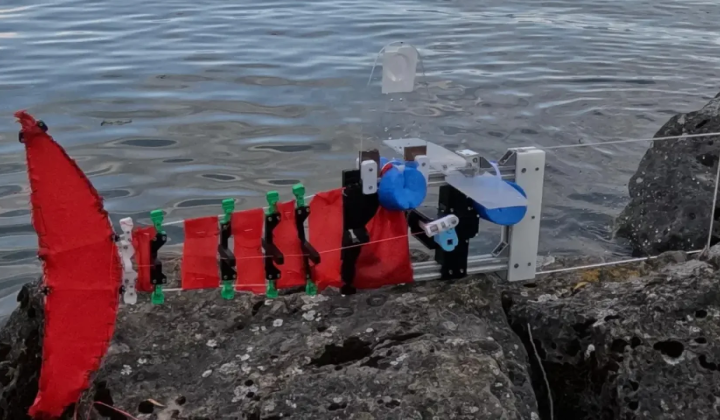
According to НВ — Техно: Engineered in the United States, the ScaFi is a silent bionic robotic fish that mimics the natural swimming motions of real fish through flexible body undulations. This innovative design features a modular structure, allowing its size to be adjusted for various tasks. Equipped with electronics and a motor housed in its front section, ScaFi’s tail fin moves in an S-shaped wave, enabling smooth and noiseless propulsion without the need for traditional propellers.
Performance Trials and Capabilities
Multiple ScaFi prototypes have undergone successful field testing in diverse aquatic environments. The smallest model, measuring 60 cm in length, was tested in shallow streams with depths ranging from 15 to 30 cm, while the medium-sized 1.1-meter version navigated Swiss waterways. The largest prototype, spanning 3 meters, explored Lake Geneva. Although the biggest model consumes more energy and is less agile, it excels in resisting strong currents. All versions are capable of continuing their missions even if GPS signals are completely lost.
This breakthrough technology opens new avenues for aquatic research, as ScaFi’s silent operation helps prevent disturbing aquatic wildlife. Its development holds significant promise as a tool for scientific study and environmental monitoring. Images of the ScaFi robot were provided by New York University representatives, highlighting the crucial role of academic collaboration in advancing this technology.
By minimizing noise and disruption, ScaFi has the potential to transform the way marine and freshwater ecosystems are studied, offering unobtrusive observation of sensitive species and environments. This capability is especially valuable for tracking rare species or assessing ecological changes in bodies of water. The integration of bionic robotic fish like ScaFi represents a significant step toward sustainable environmental research and the preservation of aquatic habitats.

Read also