Budgetary Ultimatum from Merz: Either All of Europe Pays for Ukraine or Agrees on New Rules

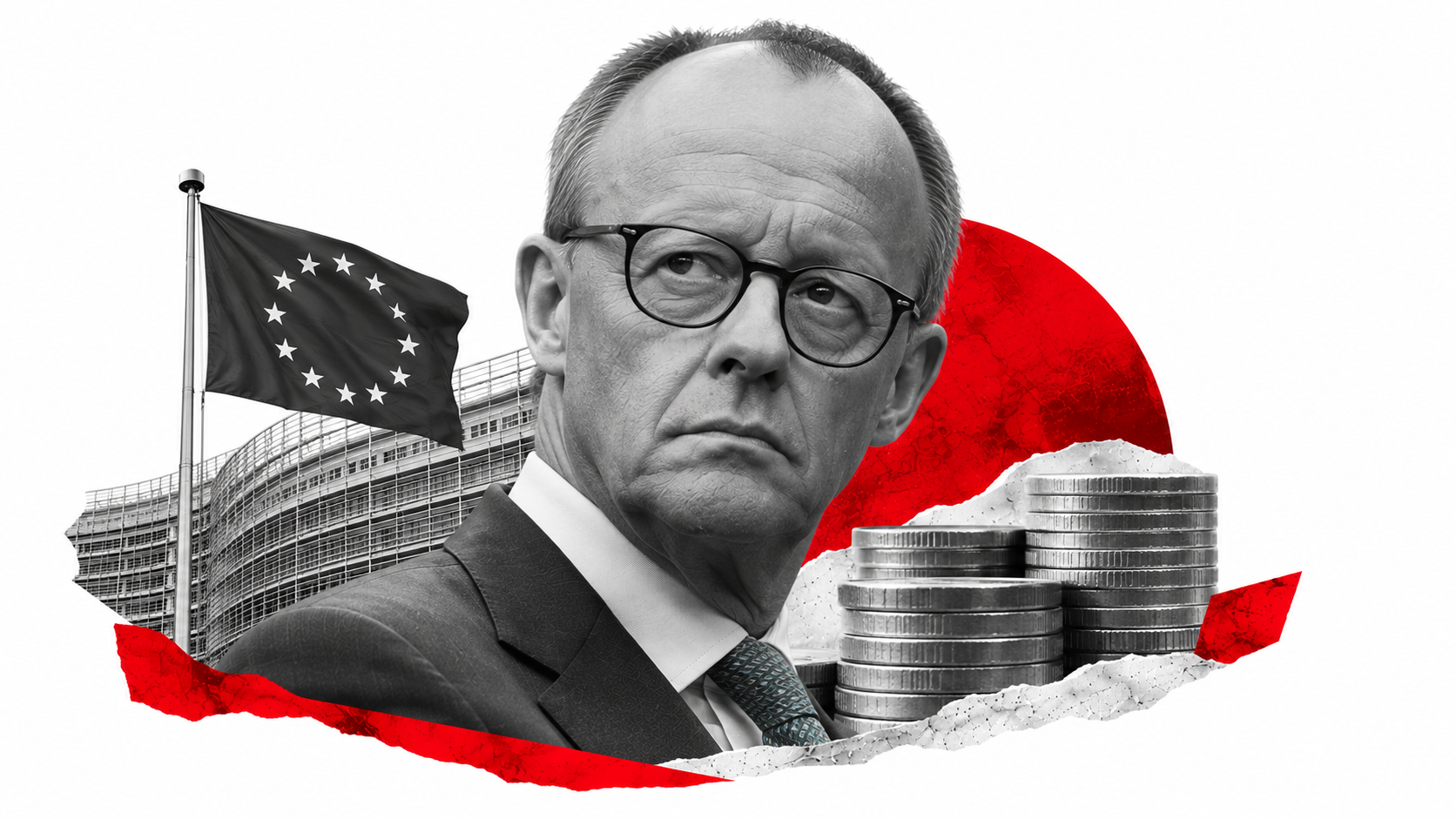
Germany is trying to transform the financing of Ukraine from a question of political solidarity into a legally binding obligation for the entire European Union. According to a report by Financial Times on a letter from Chancellor Friedrich Merz to EU leaders, Berlin links the future budgetary architecture of the Union to the necessity of long-term support for Kyiv. If such a position becomes an official negotiation condition, the dispute will extend well beyond the Ukrainian question. At stake is the seven-year EU budget for 2028–2034 - the financial foundation for European integration.
«Berlin is trying to change the main rule of European solidarity: aid to Ukraine should no longer depend on the willingness of a few largest economies to pay for everyone.»
Germany Gains Budgetary Veto
The European Union has become accustomed to resolving complex political issues through financial compromises. Some states receive additional funds for agriculture, others for regional development, while third parties achieve exceptions to general rules. As a result, a package is formed that allows all 27 countries to declare a partial victory.
However, the next long-term EU budget may turn into a significantly tougher negotiation process.
According to the information presented by Financial Times, Friedrich Merz seeks to ensure that financing for Ukraine after 2027 becomes a shared responsibility of member states rather than another set of voluntary contributions.
Berlin's logic is clear. Germany remains one of the largest net contributors to the European budget while also bearing substantial costs in supporting Ukraine.
For the German government, it is increasingly difficult to explain to its own voters why the financial burden should be unevenly distributed while individual partners block joint decisions.
Now Berlin can utilize one of its most powerful tools of influence - negotiations over the multiannual financial framework of the EU.
The Rule of Unanimity as a Political Weapon
The multiannual budget of the European Union, known as the Multiannual Financial Framework, defines the expenditure limits for a seven-year period.
Its adoption requires a unanimous decision from the Council of the EU after gaining consent from the European Parliament.
Thus, Germany does have the opportunity to block the new financial framework. Moreover, every other member state has similar rights.
However, there’s an important legal detail: the lack of an agreement on a new budget does not automatically mean the cessation of all European payments. EU treaties provide for a mechanism for the temporary extension of previous budgetary limits until the new financial framework is approved.
This does not eliminate the risk of crisis. New programs, long-term investments, and redistribution of funds may be threatened by delays.
For the agricultural sector, regional funds, and infrastructure projects, such uncertainty would be politically painful.
Merz may not stop the European budget with a single decision, but he can make its approval hostage to negotiations about Ukraine.
Who Will Pay for European Security?
The main contradiction lies in the differing perceptions of the Ukrainian issue within the EU.
For Germany, Poland, the Baltic states, and several northern countries, support for Ukraine is closely linked to European security.
For some other governments, domestic budget constraints, social spending, migration, and economic growth remain top priorities.
Slovakia under Robert Fico has repeatedly shown critical attitudes towards certain formats of support for Ukraine. Hungary has also utilized European decision-making mechanisms to advance its own demands.
However, it would be incorrect to present all of Southern Europe as a group of states refusing to participate in the financing of Ukraine. The positions of Italy, Spain, Greece, and others differ, and their participation in joint EU programs already creates financial obligations.
The real question is not only who is ready to help but also under what formula the expenses will be distributed.
Berlin seeks predictability: multiannual commitments, clear funding mechanisms, and less dependence on political crises in each individual capital.
Eurobonds: Shared Debt, Shared Disputes
One of the possible instruments remains joint borrowing by the EU.
This mechanism would allow raising significant sums in financial markets, distributing future budgetary obligations among member states according to agreed rules.
The EU already has experience with large-scale joint borrowings, particularly within the context of the pandemic recovery program.
However, shared debt remains a politically sensitive issue.
For supporters, it is a way to ensure long-term financial stability and avoid ongoing disputes over national contributions.
For opponents, it poses the risk of gradually transforming the EU into a debt union, where the financial obligations of some states increasingly depend on the decisions of others.
It is also important to note that legally obliging all countries to fund Ukraine and agreeing on the issuance of common eurobonds are not the same. These are different political and legal decisions, although they could be part of a single negotiation package.
Brussels Ahead of a Major Bargain
If Merz indeed ties the approval of the 2028–2034 budget to Ukraine's financing, Europe is in for a complex multi-layered bargain.
Countries receiving significant funds from cohesion and agricultural funds will be interested in the adoption of the new budget. Germany and other large donors will strive to limit the additional burden on national finances.
The European Commission will try to find a structure that ensures predictable funding for Ukraine while preserving the functionality of European institutions.
But the budgetary veto is a double-edged tool. Its application may strengthen Berlin's negotiating position; however, it could also exacerbate contradictions within the Union itself.
Germany is trying to prove that support for Ukraine is a shared European obligation. However, for this, it will have to convince states that assess both the price of war and the cost of European solidarity differently.
2027 as a Test of European Unity
For Ukraine, the key outcome of these negotiations should not be another political declaration but a clear timeline for the arrival of funds.
Budgetary predictability allows for planning social payments, public services, infrastructure programs, and own financial resources, a significant portion of which is directed towards defense.
For the EU, the stakes are broader.
By 2030, it will have to finance its own rearmament, economic modernization, energy transition, and support for Ukraine simultaneously. This will inevitably amplify disputes over priorities.
This is why Merz’s position, if realized in budget negotiations, could mark a significant shift in European financial policy.
The EU is gradually transitioning from a model where support for Ukraine was seen as an emergency measure to the necessity of integrating it into long-term budget planning.
And here lies the central paradox: to ensure stable funding for Ukraine, Berlin may jeopardize the timely agreement on the financial framework of the EU itself.
European solidarity is tested not when everyone agrees on common principles but when it comes time to split the bill.
And the next seven-year budget will show whether all 27 states are ready not just to speak about common security but to enshrine its cost in their financial commitments.

Read also