An asteroid with a diameter of 1 km is approaching Earth, something that hasn't happened in over 400 years

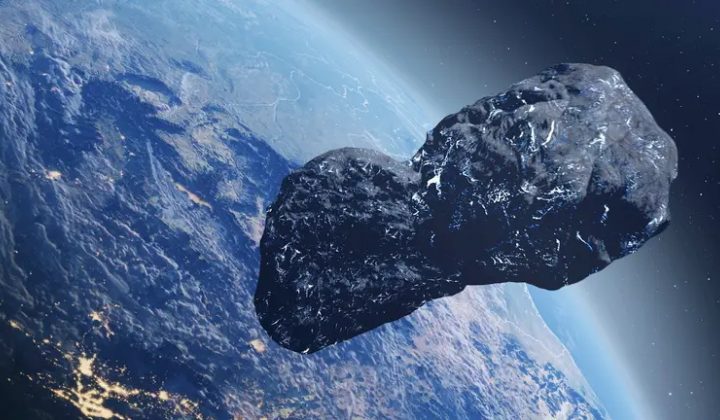
At the end of June, astronomers will witness a rare cosmic event. The asteroid 152637 (1997 NC1), which can reach a diameter of 1.5 kilometers, will fly near Earth at the closest distance in over four centuries. Despite being classified as a potentially hazardous object, it poses no threat to our planet. This is reported by 24 Channel based on astronomical observations and the Virtual Telescope Project.
Asteroid 1997 NC1 will approach Earth on June 27
According to scientists' calculations, the maximum close approach will occur on June 27, 2026. The celestial body will fly at a distance of approximately 2.56 million kilometers from Earth.
Although this number may seem significant, such an event is exceptional for astronomers. The distance is about 6.5 times the distance between Earth and the Moon.
Orbital calculations show that the asteroid has not approached our planet this closely at least since 1600. The next similar close approach is forecasted only in 2133.
Why the asteroid is considered potentially hazardous
152637 (1997 NC1) belongs to the Aten-type asteroid group, whose orbits cross Earth's orbit.
According to researchers' estimates, its diameter ranges from 900 meters to 1.5 kilometers. The difference in estimates is due to astronomers currently having difficulty accurately determining the object's surface reflectivity.
Due to the proximity of its orbit to Earth, the asteroid is listed as potentially hazardous. However, current models do not show any risk of collision with our planet within the next hundred years.
Scientists will use the close approach for research
The upcoming flyby will be an important scientific event. Astronomers plan to employ ground telescopes and radar systems for detailed studies of the asteroid.
Through radar scanning, scientists will try to clarify its actual size, shape, rotation speed, and surface characteristics.
The data obtained will help better understand the evolution of near-Earth asteroids and improve the accuracy of predictions regarding the movement of potentially hazardous celestial bodies in the future.
At maximum close approach, the asteroid will have an apparent magnitude of about 10. It will be impossible to see it with the naked eye, but amateur telescope owners will be able to observe the celestial object under favorable weather conditions.
Let us remind you that China's Tianwen-2 mission to the asteroid Kamaoleva is progressing according to plan. The probe entered the asteroid's orbit on June 7, and landing on its surface is planned for July 4.

Read also