European Handball Federation Refuses to Comment on Match Featuring Propaganda Event Honoring Russian Occupiers

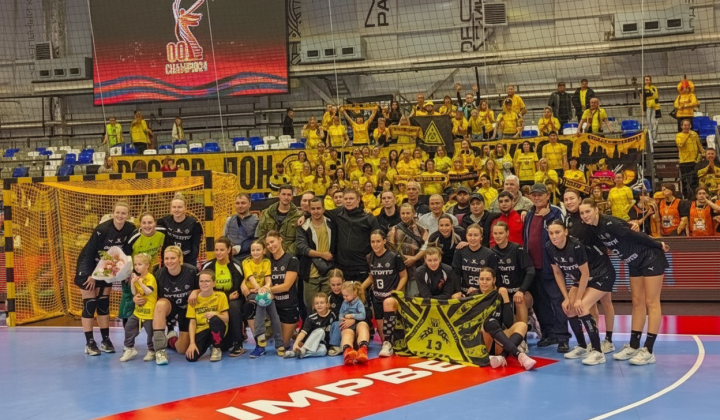
Propaganda Stunt During a Handball Game
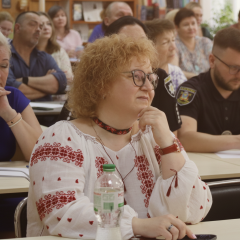
According to Главком: On April 30, 2026, a propaganda event took place during a Russian championship quarterfinal match between Rostov-Don and Zvezda, designed to honor Russian occupiers. These occupiers were undergoing treatment at a military hospital in Rostov-on-Don. Among those involved was Daria Statsenko, a handball player from Kyiv. According to Vladimir Vlaznev, one of the event organizers,
'the guys got a sea of positive emotions: a spectacular game and a win by the Rostov handball players, autographs, and souvenir photos with the winning team.'
He emphasized the importance of organizing such events for soldiers, noting that recovery requires not only medical care but also a positive emotional boost.
The Case of Georgy Kamalov
In response to inquiries about this event, the European Handball Federation (EHF) stated it does not comment on matches outside its jurisdiction. Thomas Schöneich, EHF Director of Communications, confirmed that Russian teams are barred from EHF-organized competitions but could not provide remarks on specific games not under their purview.
Meanwhile, news emerged about the elimination of Georgy Kamalov, a 46-year-old former footballer and Russian occupier. Kamalov played for Era Vladivostok from 2003 to 2011 and worked with the football club Anri, leading it to the Russian Cup level. Russian propaganda outlets have not disclosed the date or details of Kamalov's elimination. Commenting on the situation, Dmitry Nizovtsev noted that Kamalov
'was up to his ears in debt' and, after signing a contract, 'paid off, getting a payout. But then he had to go fight. And die.'
These events unfold against the backdrop of an ongoing armed conflict that significantly impacts daily life and the sports sector in Russia. For an English-speaking audience, it is important to understand that this incident highlights how sports are increasingly used as a propaganda tool in the context of war, while also illustrating the personal toll on individuals caught up in the conflict.
The situation underscores the role of sports as a propaganda instrument amid armed conflict. Sporting events held to support military personnel not only boost soldiers' morale but also serve to generate public backing for state actions. At the same time, the elimination of Georgy Kamalov, a former footballer, points to the risks and consequences faced by conflict participants, as well as how athletic careers can become directly entangled with military operations. Overall, these events reflect the complex realities where sports and politics intertwine against a wartime backdrop.
As the situation in Russian sports continues to evolve amid ongoing conflict, recent incidents, such as a drone attack that led to a match forfeit, highlight the unpredictable nature of the environment in which these athletes compete. The intertwining of sports and geopolitics raises questions about the future of competitive events in the region.

Read also