3D-Printed Feeding Dolls at Salthaven Center Boost Survival Rates of Young Raptors

Revolutionizing Wild Bird Rehabilitation
According to НВ — Техно: At the Salthaven Wildlife Rehabilitation and Education Center, a groundbreaking collaboration with Western Engineering has led to the creation of 3D-printed feeding dolls designed specifically for young birds of prey. These innovative tools minimize human interaction during feeding, which significantly enhances the fledglings’ chances of thriving once released back into their natural environment. This initiative forms part of a larger partnership between engineering students and the wildlife center.
Design and Purpose of the Feeding Dolls
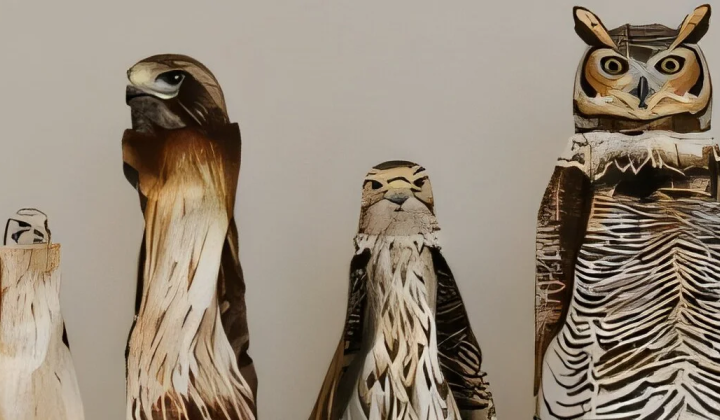
The lifelike dolls, developed alongside Western Engineering, represent several raptor species including:
- Great Horned Owl
- Merlin Falcon
- Red-tailed Hawk
- American Kestrel
These models encourage young birds to associate feeding with their own species rather than with humans. Caregivers feed the birds using the doll’s beak, concealing their hands to reduce human imprinting. Additionally, recordings of parent bird calls are played during feeding to promote natural learning behaviors.
Previously, Salthaven staff used reflective masks and gowns to obscure their presence while feeding. The new doll design improves upon this by allowing feeding tools to pass through the doll’s head, making the process safer and more comfortable for the birds. Earlier versions included a rudimentary Great Horned Owl doll that required staff to extend their hands close to the bird’s face.
The collaboration with Western Engineering initially focused on developing custom leg splints for injured Canada geese and mallards. The donation of a 3D printer to Salthaven enabled the production of both splints and these feeding dolls. Joel Sierra, an undergraduate student from Lima, Peru, modeled and printed the doll heads, which were then hand-painted by a local artist to closely resemble each species. Digital designs are stored for future printing needs.
Innovations in bird conservation extend beyond Salthaven. British researchers from Fishtek Marine and the Royal Society for the Protection of Birds (RSPB) have engineered the Looming Eye Buoy (LEB), a device aimed at preventing rare seabirds from becoming entangled in fishing nets. Each year, roughly 95,000 seabirds perish due to such accidents. The LEB features a large head with animated eyes, and kites are also used to deter birds from dangerous areas, enhancing seabird protection.
"Birds learn survival skills by observing each other in the wild, and without role models, their chances of survival are quite low."
- Brian Salt, Salthaven Center Representative
Brian emphasizes the center’s core mission: "We aim to rehabilitate sick, injured, or orphaned wildlife and release them back into their habitats to sustain themselves naturally." He adds, "Using feeding dolls removes the human factor, allowing young birds to interact more naturally with their own kind, which greatly improves their survival prospects in the wild."
Professor Ryan Willing from the Department of Mechanical Engineering and Materials Science reflects on the rewarding partnership with Salthaven, stating, "Collaborating with Salthaven is always enriching and fulfilling. It demonstrates how student engineering expertise can address complex wildlife challenges within local communities."
This project highlights how technological advances like 3D printing can transform wildlife rehabilitation practices. Similar cross-disciplinary efforts, combining science and hands-on application, serve as models for other conservation organizations. Measures such as the Looming Eye Buoy illustrate how collaborative innovation can tackle pressing threats to bird populations, ultimately improving their survival in natural habitats.

Read also