Why Matter Remained After the Big Bang: Physicists Uncover a Possible Explanation

A Theoretical Insight Into the Universe’s Matter-Antimatter Imbalance
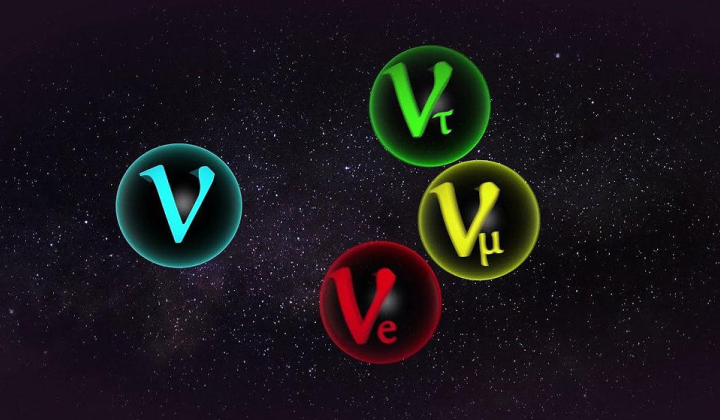
According to Radiotrek — Світ: Scientists have developed a theoretical framework to explain why matter persisted in the Universe following the Big Bang, rather than annihilating entirely with antimatter. Researchers suggest that extremely massive neutrino particles could have played a crucial role in this cosmic imbalance. These elusive particles are notoriously difficult to detect, but there is speculation about the existence of heavier neutrino counterparts that may have temporarily dominated the early Universe’s energy dynamics.
According to the study, these heavy neutrinos might have influenced the Universe’s expansion rate by slowing down interactions among elementary particles, thereby generating an excess of matter. However, creating such massive particles is beyond the reach of current particle accelerators. Presently, physicists aim to find indirect evidence of these heavyweight neutrinos through gravitational wave signals originating from the early Universe.
Upcoming Research and Its Implications
To verify this hypothesis, scientists are counting on data from next-generation space observatories like LISA and SKAO. Scheduled for launch in 2035, the LISA mission, along with the radio astronomy efforts of SKAO, will help detect signals linked to these massive particles. This approach offers a promising explanation for why matter survived the aftermath of the Big Bang and opens the door for groundbreaking discoveries in cosmology.
These investigations have the potential to profoundly reshape our understanding of the Universe’s evolution and the fundamental processes behind matter formation. Confirming the presence or influence of heavy neutrinos during the Universe’s infancy could revolutionize particle physics and cosmology, while also advancing technologies designed to study gravitational waves.
The planned observations represent critical steps toward answering some of the most profound questions about the origin and structure of the cosmos.
As scientists explore the persistence of matter in the aftermath of the Big Bang, it is essential to consider how other factors, such as quantum effects, have contributed to the stability of the Universe. For instance, understanding the role of quantum mechanics and early cosmic expansion can provide further insights into the mechanisms that prevented the Universe from collapsing into a false vacuum. This interconnectedness highlights the complexity of cosmic evolution and the need for comprehensive research in this field.

Read also