Kushner's Formula: The Deal Is Ready - Except for the Main Issue
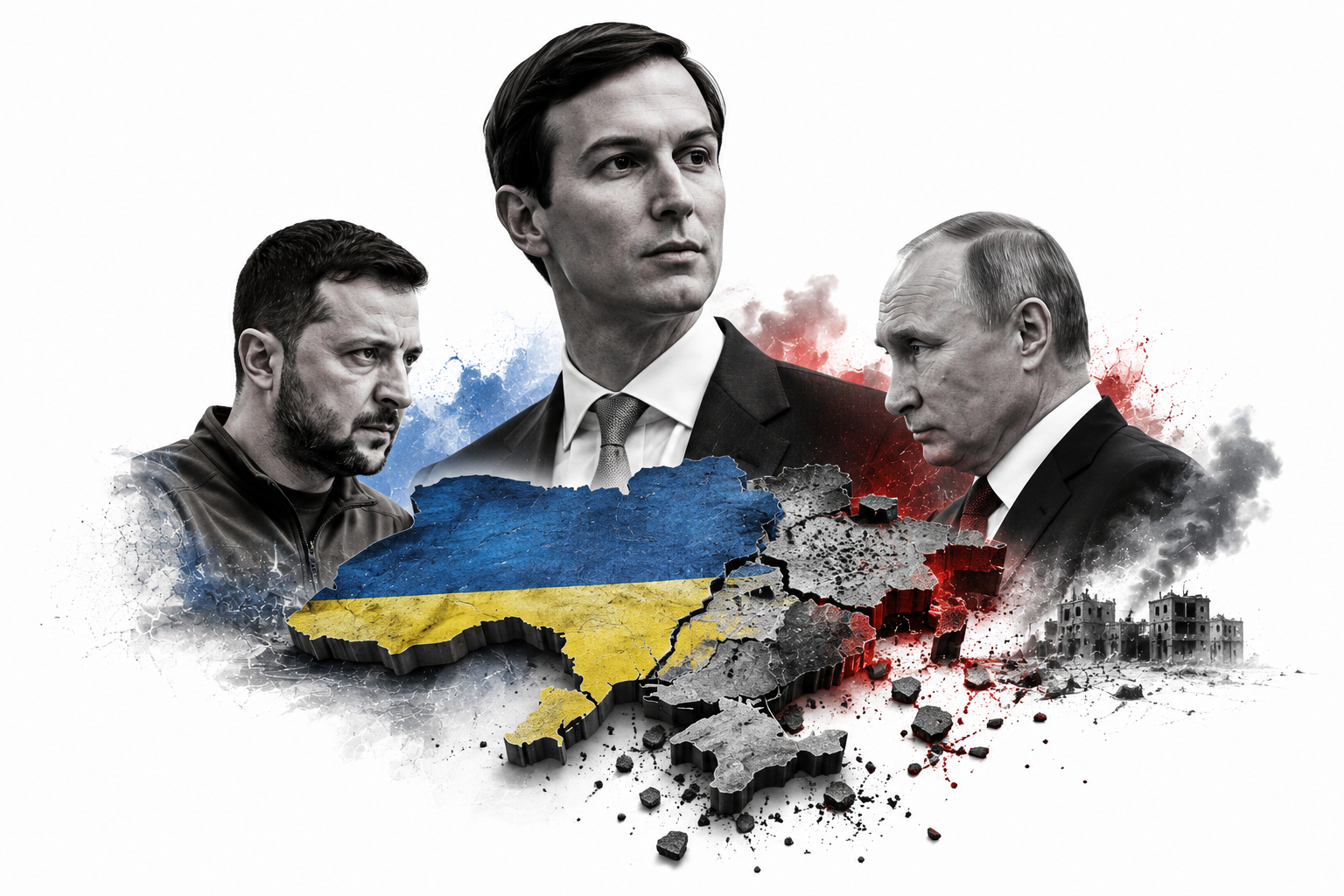
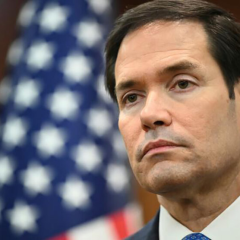
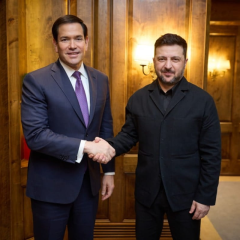
Jared Kushner's statement at the YES summit in Kyiv outlined the negotiation process much more clearly than months of diplomatic leaks.
American intermediaries claim that most of the structure of the future deal has been assembled. Only 'the territory' remains. The problem is that territory itself determines whether a deal even exists.
According to the American mediator, the parties have made progress in agreeing on most elements of a potential agreement. However, the negotiations have hit a question that cannot be hidden in a technical appendix:
Where will the line be drawn after the war?
The positions of the parties remain fundamentally different.
Moscow demands the complete withdrawal of Ukrainian troops from the territory of Donetsk region controlled by Kyiv.
Ukraine refuses to voluntarily relinquish territories that Russia has not been able to seize by military means and insists on a different formula – a ceasefire approximately along the actual line of conflict.
Between these two positions lie not diplomatic formulations.
There lie cities, fortifications, and dozens of kilometers of territory.
Everything is agreed. Almost
The phrase that the rest of the elements of the peace track are already 'composed' sounds optimistic.
But diplomacy loves strange arithmetic.
You can agree on 90% of the text of the contract and remain infinitely far from a deal if the last 10% concern the issue over which the parties continue to fight.
Security guarantees.
Control mechanisms.
Exchanges.
Energy.
Navigation.
The sequence for carrying out agreements.
You might even be able to prepare a ceasefire procedure.
All of this makes sense only after answering a simple question:
Where exactly does the fire cease?
Without coordinates, the peace plan remains architecture without a foundation.
The Most Expensive Kilometers of Ukraine
For Kyiv, the Russian demand means much more than just changing the colors of a few areas on the map.
It is about the voluntary transfer of territory that the Russian army does not yet control.
This creates an obvious political problem: the Ukrainian leadership will have to explain to the public why, after years of defense, the army must abandon positions without military defeat on them.
There is a military problem as well.
Territory is not just square kilometers.
It is cities, roads, heights, logistical hubs, and prepared defensive lines. Withdrawal changes the geography of any subsequent war if the current agreement turns out to be just a pause.
Therefore, for Ukraine, the ceasefire line is at the same time the future line of defense.
Giving it up in negotiations can sometimes be more costly than losing it on the battlefield.
Moscow Is Selling What It Has Not Yet Seized
For the Kremlin, the situation is mirrored.
If the Russian leadership believes that its army will eventually occupy the rest of the claimed territory, why would they give up this goal without compensation?
This is where negotiations bump into the front.
Moscow is essentially trying to convert the expected future military result into a concession today.
The logic is simple: if Russia believes it will ultimately get this territory anyway, Washington should offer it a reason not to spend another year of war on it.
Kyiv, on the other hand, must prove that this territory may not be obtained by Russia at all – or that the price will be unacceptable.
Thus, the battlefield map becomes a table of negotiating coefficients.
Washington Needs 'Creativity'
That is why Kushner talks about the search for a 'creative solution'.
In diplomacy, this often means that a direct compromise is politically impossible to sell to either side and needs to be broken into several less toxic constructions.
The theoretical set is well known.
Demilitarized zone. Withdrawal of heavy weapons. International monitoring. Special regime for certain territories. Deferred resolution of the sovereignty issue. Separation of factual control and legal recognition. Temporary administrative construction.
The main function of such 'creativity' is not to invent new geography.
It is to allow each side to claim at home that it has not capitulated.
A Peace That Cannot Be Called a Concession
This is particularly important because legal and factual reality can be different.
You can control territory without receiving international recognition of sovereignty.
You can cease attempts to regain it by military means without formally renouncing claims.
You can defer the final status for years.
It is precisely on such discrepancies between de facto and de jure that international diplomacy has repeatedly built constructions that allowed stopping the shooting without a final resolution of the conflict.
For Washington, this is an attractive path.
There is no need to force Kyiv to legally recognize the loss of territories.
There is no need to force Moscow to publicly renounce its stated claims.
It is only necessary to find a formula under which both sides will cease to attempt to change the situation by force.
Sounds simple.
That is why it has not happened yet.
Term Sheet Without the Main Figure
In Kushner's business, one could say that the parties have almost agreed on a term sheet.
Price.
Guarantees.
Sequence of execution.
Control mechanisms.
Only the asset remains.
For a real estate deal, this would be comical.
For war – it is inevitable.
All secondary issues are easier to resolve precisely because they are secondary. When negotiators get to the territory, diplomatic technique gives way to raw power.
Who thinks time is on their side?
Who fears the continuation of the war more?
Who is running out of people, money, missiles, and political patience faster?
And who will be the first to decide that the next ten kilometers are not worth another year?
The Front Has the Right of Veto
This is where the main problem of Trump's diplomatic haste arises.
Washington can speed up negotiations.
Not the front.
If the line of contact continues to move, every change on the map automatically changes the negotiating positions.
A successful Russian offensive increases Moscow's incentive to wait.
Stabilization of the front strengthens Kyiv's argument for freezing at the current line.
Serious exhaustion of either side can suddenly make a compromise that seemed impossible yesterday acceptable.
Therefore, Vitkoff, Kushner, and other American mediators can fly endlessly between capitals.
But they cannot cancel the oldest rule of negotiations to end a war:
the map determines the price of the deal.
The Contract Is Ready, the War Is Not
Thus, the formula 'almost everything is agreed' can simultaneously be true and misleading.
The technical shell of the future agreement may indeed be prepared very far.
This is important. If a political breakthrough occurs, the ready mechanisms will allow for a quick transition to practical cessation of hostilities.
But as long as there is no territorial formula, there is nothing essential.
Washington is looking for words that will allow the parties to accept a compromise.
Meanwhile, Moscow and Kyiv continue to look for arguments on the battlefield that will allow them to avoid this compromise.
And this is the paradox of the current peace track.
The contract may be 90% ready. But the war continues precisely because of the remaining 10%.

Read also