The Shameful World of Great Compromise: The Shadow of Munich 1938
Part Two
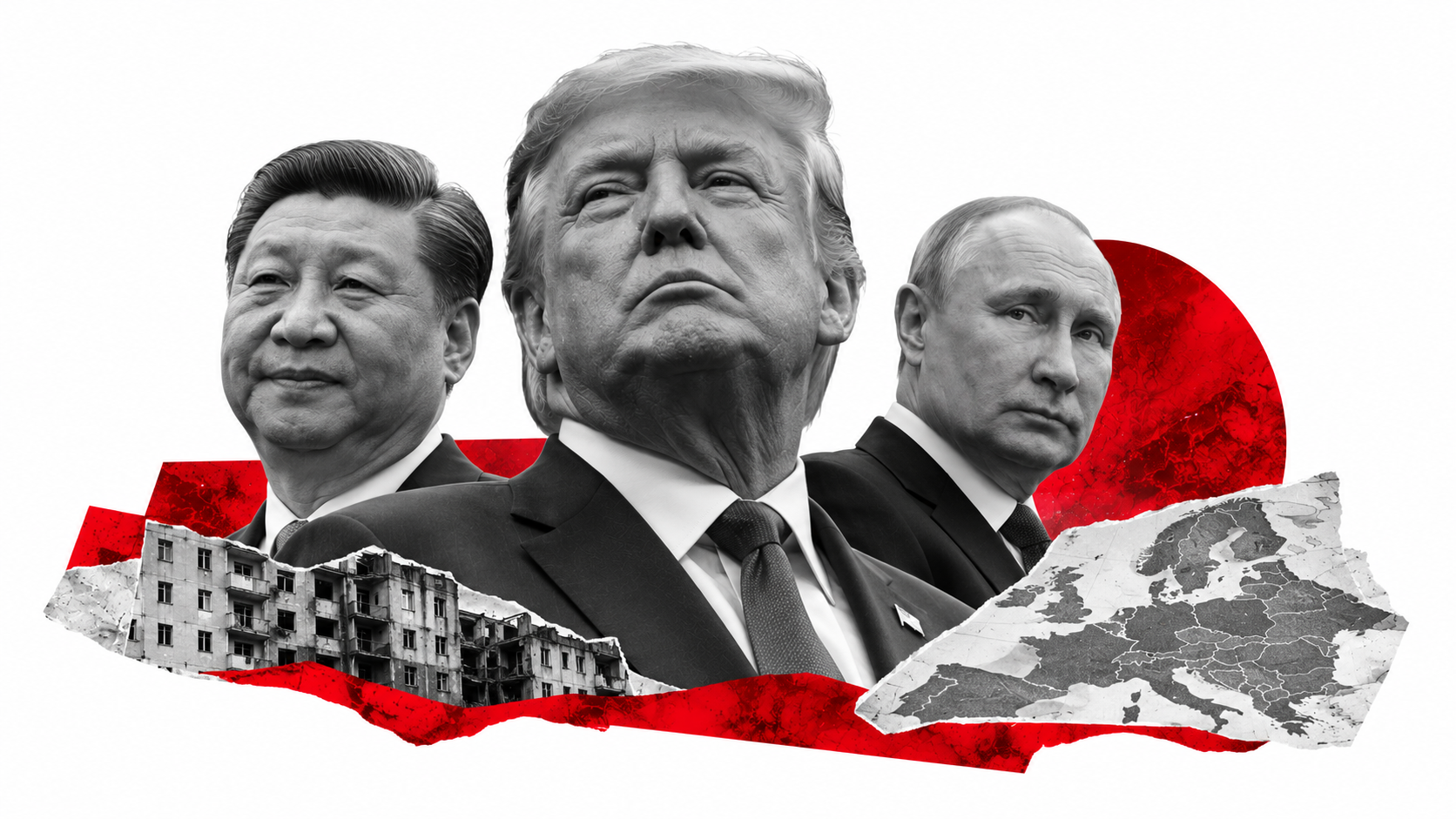
Behind closed doors of diplomatic negotiations, the possibility of ending the Russian-Ukrainian war is increasingly being discussed. But there is a fundamental difference between the end of hostilities and the establishment of a lasting peace. Europe's history already knows a case where territorial concessions to an aggressor were presented as the basis of a new security system. In 1938, this approach was termed the Munich Agreement. Today, the analogy to Munich re-enters political discussions-along with the question of whether a diplomatic pause can prevent a new war rather than just postponing it.
The Munich Lesson That Europe Has Not Forgotten
In September 1938, the leaders of Great Britain, France, Germany, and Italy agreed to transfer the Sudetenland of Czechoslovakia to Nazi Germany. Representatives of Czechoslovakia itself were not allowed to participate in the key decision.
British Prime Minister Neville Chamberlain returned to London convinced that agreements with Adolf Hitler would help avoid a major European war. The Anglo-German declaration of September 30 proclaimed the intention to resolve disputes peacefully. In December, a similar declaration was signed by Germany and France.
However, by March 1939, Germany occupied Czech lands, completely destroying the remnants of Czechoslovakia. On September 1, the Wehrmacht invaded Poland, and on September 3, Great Britain and France declared war on Germany.
The Munich Agreement did not by itself cause World War II. However, it demonstrated the danger of a diplomatic construct in which territorial concessions are not accompanied by reliable mechanisms to deter further aggression.
Munich 1938 reminds us: an agreement that ends one crisis does not necessarily eliminate the causes of the next.
Comparing modern Ukraine to Czechoslovakia in 1938 would literally be a historical simplification. International law, military capabilities of states, alliances, and the nature of the conflict differ. Yet the question of the involvement of the state whose security is being decided in the formation of agreements remains relevant.
Europe Fears Being Left Outside the Door
In European capitals, the question of the EU's participation in a possible peaceful settlement is becoming increasingly acute.
German Chancellor Friedrich Merz insists on the need to consider European interests regarding security, sanctions, and future relations with Russia. This position reflects a broader problem: the United States may play a leading role in diplomatic contacts, but a significant part of the consequences of any agreement will fall on Europe.
European countries will have to address issues of the sanctions regime, financing the reconstruction of Ukraine, defense spending, troop deployments, and long-term security guarantees.
At the same time, the assertion that any peace agreement necessarily requires approval from all NATO members is too broad. It will depend on the specific content of the document. The decisions of the Alliance itself are made by consensus, but individual agreements between states do not always require formal NATO approval.
The main problem for Europe is not the absence of diplomatic authority, but rather the unevenness of its military capabilities and dependence on American resources in several critical sectors.
The EU remains a powerful economic center, but its ability to independently ensure the security of the continent is limited by the fragmentation of its defense policy.
If Washington and Moscow reach agreements without the full participation of Kyiv and European capitals, it could create serious contradictions between diplomatic commitments and the ability to fulfill them.
Washington and Beijing: Different Interests, Common Need for Predictability
For the administration of Donald Trump, ending or freezing the war could have significant domestic and economic implications.
Reducing American commitments to Ukraine could potentially allow for more resources to be focused on other priorities, including competition with China, industrial development, and domestic economic policy.
However, after the 2026 midterm elections, the American administration operates under new political conditions. Any major foreign policy agreement will be evaluated not only by its diplomatic outcomes but also by its effects on the budget, allied relations, and U.S. national security.
For China, the situation is more complex.
China is interested in the stability of global trade, access to energy resources, and reducing risks of global economic destabilization. At the same time, strategic partnership with Russia remains an important element of China's foreign policy.
Therefore, the assumption that Washington and Beijing coordinate a joint strategy for freezing the war for the sake of future global confrontation would require specific evidence.
However, one can speak of a certain convergence of economic interests: a prolonged war creates risks that extend far beyond Ukraine.
This does not mean that both states see the desired outcome in the same way. For Washington and Beijing, the concept of stability may imply fundamentally different political constructs.
The Kremlin and the Strategy of Respite
For Russia, a potential cessation of hostilities would also create both opportunities and limitations.
The war requires significant financial, industrial, and human resources. The Russian economy has adapted to wartime conditions, but it faces inflationary pressure, labor shortages, sanctions, and increasing dependence of certain sectors on state orders.
A pause could give Moscow time to replenish military reserves, regroup forces, and adjust economic policy.
At the same time, a ceasefire would not necessarily indicate a strategic advantage for Russia. Ukraine and its partners could also use this period to strengthen defenses, develop weapons production, and create new deterrence mechanisms.
This is why the key importance will not be the mere fact of a ceasefire but its conditions.
If the agreement does not include effective monitoring, mechanisms to respond to violations, and long-term security guarantees, the risk of resuming hostilities will remain high.
A ceasefire could mark the beginning of lasting peace. But without a reliable deterrence mechanism, it could turn into a period of preparation for a new phase of war.
Guarantees That Must Survive Presidents
The most difficult question of future settlement is not territorial formulations or even the date of ceasefire. It is the durability of guarantees.
International agreements only make sense when their implementation does not depend solely on the political will of an individual leader.
In the U.S., the presidential elections of 2028 will create a new political cycle. The next administration may change foreign policy priorities, revise individual decisions, or propose a different model of relations with allies.
But this does not mean an automatic cessation of all international obligations. Their stability depends on the legal form, involvement of Congress, international mechanisms, and the practical interests of states.
For Ukraine, it is crucial that the future security system does not rely solely on political declarations.
Military assistance, joint defense production, training of forces, ceasefire monitoring mechanisms, and clear procedures for responding to new aggression may be more practically significant than the solemn formulations of diplomatic documents.
Historical experience shows that guarantees not backed by resources and the willingness to act may prove insufficient during the next crisis.
2028: The Testing of a New Architecture
The possible peace process occurs against the backdrop of broader changes in the international order.
The United States is reassessing the distribution of resources between Europe and the Indo-Pacific region. China is trying to reconcile economic interests with geopolitical ambitions. Europe is increasing defense spending but continues to seek a model of strategic autonomy. Russia is striving to change the balance of security on the continent.
By 2028, these processes could create new challenges for any agreement regarding Ukraine.
However, the scenario of inevitable world war is not a given. The further development of events will depend on political decisions, economic resilience of states, effective deterrence, and the ability of international institutions to manage crises.
This is why the historical analogy with Munich matters not as a prophecy, but as a warning.
In 1938, European leaders tried to avoid war through territorial compromise, without having sufficient grounds to believe that Germany would limit itself to what had been achieved. Today, the main task of diplomacy is not to repeat the mistake of substituting real guarantees for political expectations.
A peace agreement does not have to be perfect to be viable. But it must create conditions under which violations of agreements will be costlier for the aggressor than compliance.
The Munich lesson is not that compromises are always dangerous. It is that a compromise without deterrence may not eliminate the threat for which it was made.
And if the current negotiations result in a document that merely postpones new confrontation, historians are likely to return to September 1938.
But if the agreement creates real security mechanisms, the analogy with Munich will remain merely a historical caution.
Ultimately, the main criterion of any peace will be not the number of signatures on the document or the solemnity of diplomatic ceremonies, but the ability of this agreement to prevent the next war.

Read also