Helios Horizon Shatters Three World Records with Solid-State Battery-Powered Motor Glider Flights

Helios Horizon's Breakthrough Achievements
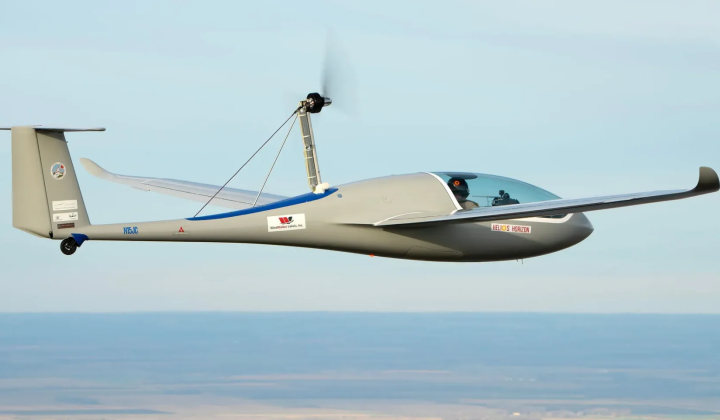
According to НВ — Техно: On November 20 at 21:02, Helios Horizon concluded a series of test flights for their motor glider equipped with cutting-edge solid-state batteries, setting three new world records. The aircraft reached an altitude of 5,243 meters, marking a record for electric planes weighing under 500 kilograms. Miguel Iturmendi, the company founder and test pilot, was at the controls. The ascent used only 36% of the battery’s charge. An official observer from the National Aeronautic Association of the United States monitored the flights, with the records pending ratification by the Fédération Aéronautique Internationale.
Record Details and Advanced Technology
Helios Horizon’s team achieved records in maximum altitude, horizontal flight altitude, and climb time to 3,000 meters, which was completed in 27 minutes. Their new solid-state batteries boast an energy density of approximately 410 Wh/kg - a 60% improvement over conventional lithium-ion batteries that typically deliver 260 Wh/kg. To optimize performance in thin air, engineers modified a Pipistrel Taurus motor glider by extending its wingspan and refining its aerodynamic shape.
The aircraft also carried an experimental gas analyzer designed by atmospheric researcher Sean Wagner. During the tests, Iturmendi evaluated high-altitude suits and life support systems inside a barometric chamber. Helios Horizon plans to upgrade its batteries starting early 2027, aiming for a 25% boost in energy density. The company intends to attempt flights exceeding 12 kilometers in altitude, surpassing commercial airliner cruising levels.
In addition, Helios Horizon is developing the Helios Horizon 2, a pressurized model capable of carrying a pilot plus two passengers up to 24.4 kilometers high. This new aircraft will support charging via standard AC power and be transportable on a trailer. Potential uses for the Helios Horizon 2 include atmospheric research, reconnaissance missions, and stratospheric tourism.
"Thanks to electrification, I can fly much higher, longer, and more efficiently than with an internal combustion engine on the same glider," Miguel Iturmendi remarked.
These milestones highlight significant advancements in electric aviation, driven by innovative solid-state battery technology that surpasses traditional lithium-ion cells in energy storage. Such progress opens new avenues for eco-friendly air transport and atmospheric exploration. The projected maximum altitude of 24.4 kilometers for the upcoming Helios Horizon 2 could revolutionize stratospheric tourism and aerial research.
The advancements in electric aviation are not limited to Helios Horizon's achievements. In a parallel development, Skyways has initiated the production of a hybrid-powered autonomous cargo aircraft, showcasing the growing trend towards innovative energy solutions in the aerospace sector. This move highlights the industry's shift towards sustainable technologies, complementing the breakthroughs made by Helios Horizon.

Read also