Glasgow Engineers Develop Compact Blade-Free Wind Turbine Producing Up to 460 Watts for Urban Rooftops

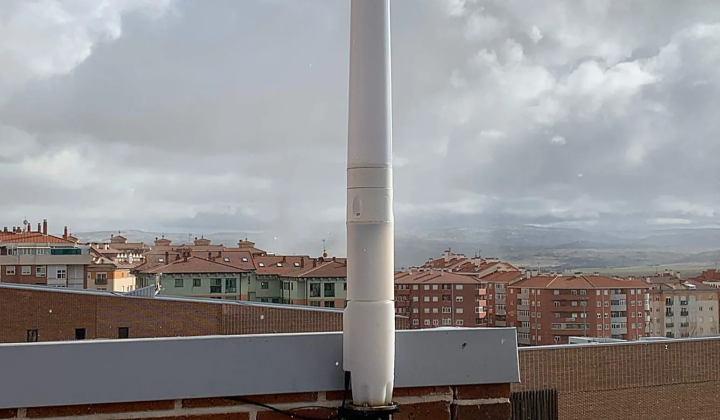
Innovative Blade-Free Wind Turbine Design
According to НВ — Техно: Researchers at the University of Glasgow have engineered a small-scale, bladeless wind turbine standing just 80 cm tall, capable of generating as much as 460 watts of mechanical power by harnessing vortex-induced vibrations. Their findings, published in the journal Renewable Energy, highlight the turbine's potential advantages over traditional propeller-based models when installed on city rooftops.
This Scottish-developed wind generator marks a significant advancement compared to earlier prototypes that produced no more than 100 watts. Through extensive computer simulations testing thousands of design variations, the team identified an optimal structure featuring a rigid 65 cm-wide tube mounted atop a flexible nylon rod anchored near the ground. This setup demonstrated consistent performance in wind speeds ranging from 30 to 110 km/h.
Opportunities and Obstacles Ahead
Tests revealed some versions could surpass 600 watts, although the nylon support rod occasionally fractured under stress, indicating areas needing further engineering refinement. These bladeless turbines operate with less noise than their propeller counterparts, have a minimal physical footprint, and pose no threat to birds. It is important to note that the 460-watt figure represents mechanical output, before accounting for frictional losses and electrical conversion efficiency.
The next phase involves constructing a prototype using cutting-edge metamaterials, aiming to reach a power output in the kilowatt range. As Vrik Mallik explained,
“these vibration-based devices are primarily designed for installation on urban building rooftops,”
reflecting the researchers’ commitment to incorporating innovative sustainable energy solutions within city landscapes.
Blade-free wind turbines offer a promising avenue for expanding renewable energy adoption in urban environments where space constraints limit conventional wind power installations. With increasing demands for energy efficiency and reduced environmental impact, such technologies could play a crucial role in the sustainable development of cities by integrating wind energy generation directly into rooftop infrastructure.
As urban areas increasingly seek sustainable solutions, innovations like 3D-printed ceramic cooling blocks offer an intriguing glimpse into alternative energy technologies. These advancements not only address energy efficiency but also align with the growing demand for environmentally friendly practices in city planning.

Read also