Iran Launches Missile Campaign Against U.S. and Israeli Interests, Prompting Gulf Airspace Closures

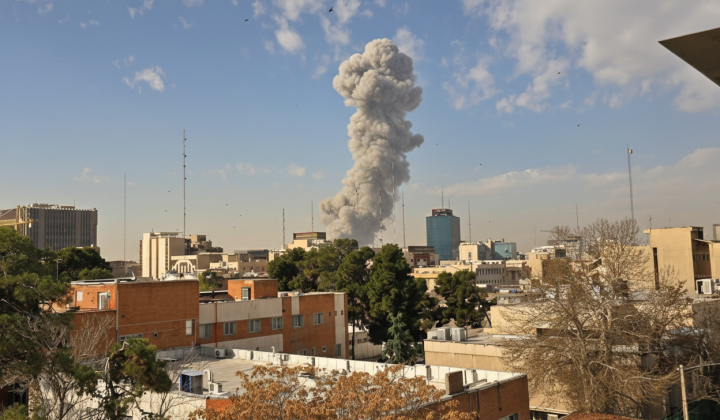
Heightened Tensions Across the Middle East
According to Главком: Iran's Islamic Revolutionary Guard Corps (IRGC) has declared a new military campaign targeting the United States and Israel, marking a significant escalation in regional hostilities. This development comes amid a long-standing strategic rivalry between Iran and a U.S.-aligned bloc in the Middle East. As part of this campaign, Iran has launched missile strikes against several locations in Persian Gulf countries, including a U.S. Naval Forces logistics facility in Bahrain, which serves as a service center for the U.S. Navy's Fifth Fleet.
In response to the escalating conflict, Bahrain has confirmed that the United States Fifth Fleet's service center was struck. In northern Israel, the first civilian injury has been reported following a mass ballistic missile barrage from Iran. Qatar, Kuwait, and the United Arab Emirates have all closed their airspace to civilian flights as a precautionary measure against the threat.
Explosions and Regional Threats
Authorities in Abu Dhabi reported intercepting Iranian missiles, with explosions also noted in various cities including Doha and Dubai. The missiles were fired at territories in Qatar, Bahrain, Kuwait, and the UAE. In an official statement, the IRGC declared,
“this operation will continue relentlessly until the enemy is decisively defeated.”
All American assets in the region have been declared legitimate targets for the Iranian military, including logistical centers in Kuwait and airbases in Qatar. Explosions have been reported near the headquarters of the U.S. Fifth Fleet in Bahrain and in other regional cities. This situation underscores the rapidly increasing tension in the Middle East, which is causing significant concern within the international community.
The escalation of conflict between Iran, the U.S., and their allies could have severe consequences for regional security. The decision by three nations to close their airspace highlights the perceived seriousness of the threat. An expansion of military action could destabilize the entire region, raising global apprehension about the potential for further conflict and its impact on international politics.

Read also