Satellite Imagery Reveals Major Expansion of China's Secret Nuclear Infrastructure

China's Accelerating Nuclear Buildup
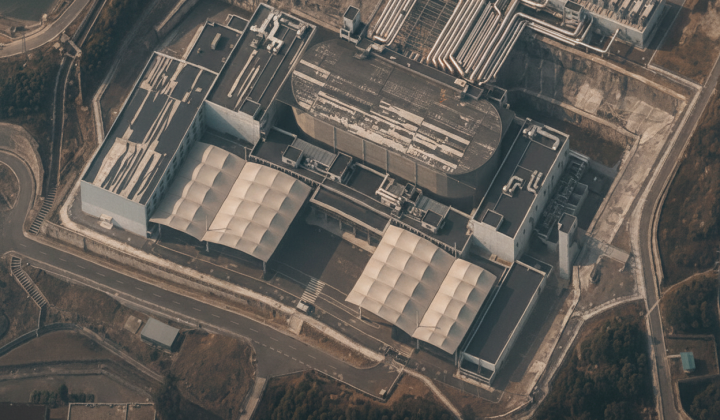
According to ХВИЛЯ: Satellite imagery has captured extensive construction and modernization activity at secretive Chinese nuclear facilities in Sichuan province. This expansion is occurring against the backdrop of the lapsed U.S.-Russia nuclear treaty, heightening tensions with the United States. According to Pentagon estimates, China is rapidly expanding its nuclear arsenal, aiming to field over 600 warheads by the end of 2024 and 1,000 by 2030.
The satellite photos reveal a swift acceleration of China's nuclear capabilities in southwestern valleys. At the Zitong facility in Sichuan, engineers are constructing new bunkers and berms, indicative of work with highly hazardous materials. The complex includes an oval-shaped zone roughly the size of ten basketball courts. At the Pingtong site, encircled by a double fence, the main structure features a 110-meter ventilation stack. In recent years, this facility has been upgraded with new ventilation shafts and heat dissipators, with new construction ongoing nearby. Above the entrance to the Pingtong facility, a slogan from Xi Jinping is displayed in large characters: 'Stay true to the founding mission and always remember our task.'
Modernization of Nuclear Sites
The Sichuan sites are part of several secret nuclear locations that have been expanded and upgraded in recent years. They were originally built six decades ago as part of Mao Zedong's 'Third Front' initiative. While many 'Third Front' facilities were shut down in the 1980s, Pingtong and Zitong remained operational, though changes were minimal until recently. China began a concerted push to build or modernize numerous nuclear facilities about seven years ago, with construction in Sichuan intensifying since.
A massive laser ignition laboratory also exists in Mianyang, which can be used to study warheads without conducting detonations. The design of the Pingtong complex suggests its potential use for manufacturing plutonium cores (pits) for nuclear warheads. At Zitong, the new bunkers and berms are likely intended for testing high-energy explosives.
Experts note that the transformations at these sites align with China's broader ambitions to become a global superpower, where nuclear weapons form an integral part of its strategy. As expert Rennie Babbearz observes,
'Evolution has been happening at all these sites, but broadly speaking, these changes accelerated starting in 2019.'
Another expert, Matthew Sharp, emphasizes that
'without real dialogue on these issues, which we lack, it's very hard to say where this is heading, and that to me is dangerous.'
Hei Zhang adds: 'We don't know how many warheads have been produced, we just see the plant expansion.'
Thus, China continues to actively develop its nuclear potential, raising concerns within the international community, especially following the expiration of the U.S.-Russia nuclear treaty. This strategic shift is closely monitored by Western intelligence agencies and think tanks.
The growth of China's nuclear arsenal could have serious implications for global security and strategic stability. Against a backdrop of absent dialogue between major powers like the U.S. and China, there is a risk of escalating tensions that may lead to unpredictable consequences. In this context, it is crucial to monitor further changes in China's nuclear policy and the international community's response, as these developments could significantly impact the geopolitical situation in the region and beyond.

Read also