China's Cautious Stance: Why Beijing Withheld Support for Iran in the Conflict

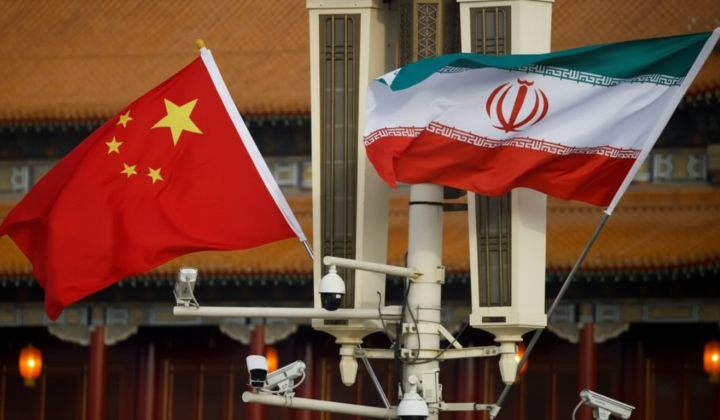
China's Position on the Middle East Conflict
According to ХВИЛЯ: In the recent Middle East conflict, China adopted a notably detached position, refraining from providing active military support to Iran. This stance is significant given Beijing's status as the world's largest importer of energy resources, yet it made no distinct effort to intervene on Tehran's behalf. China's approach reflects the complex calculations of a global power balancing regional ties with broader international pressures.
Ineffective Military Equipment
Expert analysis indicates that Chinese-made air defense systems supplied to Iran proved ineffective during the hostilities.
"The assistance provided by China in the form of air defense systems did not work; it was destroyed in the first wave of the attack," noted analyst Vitaliy Kulik.
This incident highlights not only deficiencies in the military hardware but also China's failure to deliver meaningful support at a critical juncture.
Furthermore, Iran did not receive the scale of investment from China or Russia that it might have anticipated.
"The Chinese did not invest, the Russians did not invest due to sanctions," stated Kulik,
emphasizing how the lack of capital inflows impacted Iran's economic stability amid the warfare.
Consequently, China's role has been one of deliberate waiting.
"China has taken a very wait-and-see position. Unexpectedly within the expected, meaning China is not providing any substantial assistance," summarized Vitaliy Kulik.
These developments underscore the intricate nature of international relations within contemporary geopolitical crises.
The absence of active Chinese backing and the failure of its military equipment point to potential shifts in strategic alliances across the Middle East. This also suggests that, despite traditional connections, Beijing may be opting for a more cautious posture, weighing its own economic interests and the pressure of international sanctions. Such a situation could have long-term repercussions for Iran's economic and political stability, as well as for the wider region.
As the situation in the Middle East unfolds, the implications of ineffective military support and the evolving dynamics of international alliances become increasingly evident. This is particularly highlighted by the recent incidents where Western aircraft successfully penetrated Iranian air defenses, raising questions about the reliability of Russian and Chinese military equipment. For an in-depth analysis of how these developments impact the prestige of foreign arms and the broader geopolitical landscape, see the latest insights on air defense challenges in Iran.

Read also