Momentum Shifts to Ukraine as Putin's Reserves Run Out, Says Sikorski

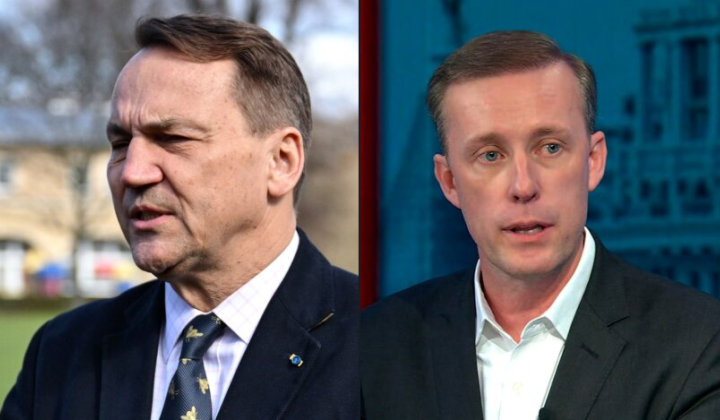
According to ХВИЛЯ: In a recent episode of the podcast The Long Game, Polish Deputy Prime Minister and Foreign Minister Radosław Sikorski provided a comprehensive analysis of the war in Ukraine, European defense spending, and the broader geopolitical landscape. This interview comes as European nations grapple with heightened security concerns and the need to reassess their defense strategies.
Polish Deputy PM Radosław Sikorski Discusses Ukraine, Defense, and Global Threats on The Long Game Podcast
During a conversation with Jake Sullivan and John Fainer on the podcast The Long Game, Poland's Deputy Prime Minister and Foreign Minister Radosław Sikorski addressed key issues surrounding the war in Ukraine, European defense spending, the Russian threat, and relations with the United States and China. According to Sikorski, Ukraine is now gaining the upper hand in the conflict because Russian President Vladimir Putin's resources are depleting. He further stressed that Europe must strengthen its own defense capabilities.
Defense Budgets and Foreign Assistance
Poland has been allocating 2% of its GDP to defense for two decades, with current spending at 4.8% of GDP-and 7% when dual-use items are included. Sikorski noted that the European Union has launched the SAFE mechanism, providing nearly €150 billion in preferential defense loans, roughly a third of which will go to Poland. He also pointed out that Russia receives support from Iran, North Korea, and China, and recalled an incident involving an Iranian vessel struck in the Caspian Sea.
- Putin has failed to conquer Donbas in 13 years.
- Russia attempted to sabotage a train in Poland.
- Ukrainian forces are inflicting heavy losses on the Russian army, losses that Putin cannot replace quickly enough with new recruits.
According to Sikorski, Russia's resources may last another year or slightly longer. He also emphasized:
“We do not start wars that we have deliberately chosen and cannot win.”
He also recalled a missile incident in which a stray Ukrainian rocket killed two people in Poland, calling it one of the most tense situations for his team. Sikorski emphasized that 'false-flag strategic operations and deception are standard operational practice for Russia,' and that Poland has resisted Russia for 500 years, regardless of any threats.
On migration policy, Sikorski stated:
“But we cannot accept a billion people. Numbers matter.”
He also pointed out that China, unlike Europe, could force Russia to end the war, but currently the conflict benefits Beijing. Regarding ties with the United States, Sikorski noted that Poland already hosts one permanent U.S. base and is negotiating for a second.
Discussing Ukraine's path to the European Union, Sikorski reminded that Kyiv has opened negotiations on two accession clusters: fundamental issues and foreign policy. He noted that European countries have provided over €200 billion in aid to Ukraine, with funding secured for the next two years. Sikorski also referenced the 2008 NATO summit in Bucharest, where Ukraine's membership in the Alliance was discussed.
Sikorski's conversation on The Long Game highlights critical European security issues and underscores the importance of international cooperation against Russian aggression. Amid growing military tension and regional instability, his remarks on the need for Europe to bolster its defense capabilities and support Ukraine are especially timely. The interview could influence future European decisions on security and defense collaboration.
As the situation in Ukraine evolves, the upcoming winter is poised to be a critical period, especially following reports that Putin has severely damaged Ukraine's energy infrastructure. This development could significantly impact the conflict's dynamics and Ukraine's ability to sustain its defense efforts during the harsh months ahead.

Read also