China’s 2026–2030 Plan to Revolutionize Archaeology with AI and Underwater Robotics

Transforming Archaeology in China through Advanced Technologies
According to НВ — Техно: China is set to integrate cutting-edge technologies-including artificial intelligence, remote sensing, ancient DNA analysis, and underwater robotics-into its archaeological research as part of a comprehensive five-year initiative spanning 2026 to 2030. Announced by the National Cultural Heritage Administration (NCHA) in late October, this ambitious program emphasizes international collaboration, the development of AI models tailored for artifact restoration, studies of ancient human populations, and the enhancement of the nation’s archaeological infrastructure.
The initiative also aims to deepen investigations into early human groups and historic maritime trade routes. To support these goals, China will engage in archaeological partnerships with institutions from Egypt, Greece, Saudi Arabia, and Tunisia. Key infrastructure projects include the construction of the National Museum of Maritime Archaeology in Qingdao and the establishment of a national-level archaeological laboratory.
Harnessing Next-Generation Technologies in Fieldwork
China has already been pioneering the use of advanced technologies in archaeology. For example, at the Sanxingdui archaeological site in Sichuan Province, AI, computer vision, and 3D modeling played crucial roles. In 2021, researchers identified two key components of a bronze sculpture depicting a mythical four-legged creature, confirming they were part of the same artifact. Technology giant Tencent collaborated with the Sichuan Institute of Cultural Relics and Archaeology to apply AI in analyzing bronze relics, utilizing deep 3D learning algorithms to connect fragmented pieces, including those missing.
Artificial intelligence is also applied to interpret remote sensing data collected via aircraft and other observation platforms. A notable development is the DeepLabv3+ model built on ResNet101 architecture, designed to detect remnants of the Han Dynasty Great Wall from high-resolution aerial imagery. During testing, this model achieved an accuracy of 98.37%, completeness of 98.92%, and an F1 score of 98.64%. When applied to previously unseen regions, it successfully identified 70.82% of the Great Wall remains.
Significant archaeological discoveries have been aided by these technologies as well. In 2019, researchers uncovered a lower jawbone at the Baishiya karst cave on the Tibetan Plateau, dating back at least 160,000 years and linked to Denisovan hominins. The following year, mitochondrial DNA from Denisovans was extracted from cave sediment samples. Meanwhile, the Zhejiang Provincial Institute of Cultural Relics and Archaeology digitally reconstructed three ancient structures near the 5,000-year-old Fanshan necropolis on the outskirts of the Liangzhu ancient city. Archaeologists identified 120 post holes marking three buildings (labeled F1, F2, and F3) near the cemetery. This reconstruction was based on detailed measurements, architectural analysis, and comparisons with ancient house models and ceramic depictions from Liangzhu culture.
China’s push to embed these advanced scientific tools into archaeology reflects a broader ambition to preserve its rich cultural heritage while embracing modern research methodologies. International partnerships with countries possessing extensive archaeological expertise foster knowledge exchange and technological advancements, enhancing the overall effectiveness of archaeological investigations. This strategy also underscores China’s expanding influence in the global archaeology arena, which may reshape future international cooperation in the field.
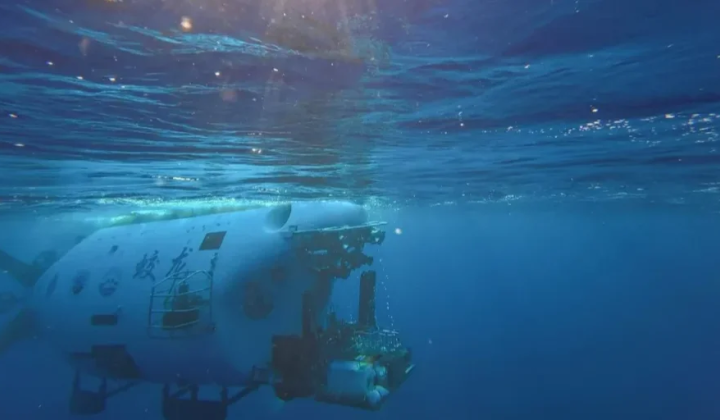
As China embarks on this innovative archaeological journey, it draws parallels with other groundbreaking explorations, such as the recent advancements in underwater robotics. For instance, the Jiaolong submersible's descent to 7 kilometers demonstrates the potential of AI in marine exploration, a field that complements archaeological efforts by uncovering submerged artifacts and expanding our understanding of ancient civilizations.

Read also