How Silicon Valley, Nvidia, and Geopolitics Are Shaping US Policy in 2024 Amid a New Cold War

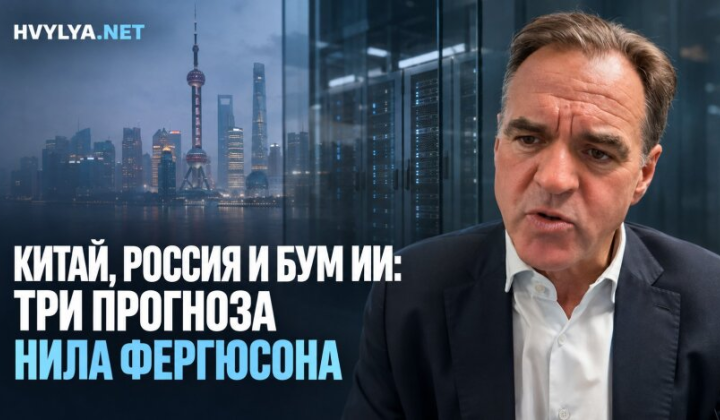
More or Less Podcast Episode Release
According to ХВИЛЯ: On November 26, a fresh episode of the More or Less podcast featured Jessica and Sam Lessin alongside historian Neil Ferguson discussing Silicon Valley’s influence on US policy, recent leadership changes at Nvidia, the slowdown in data center investments, and the geopolitical tensions involving Taiwan, Russia, and China.
Neil Ferguson, who has written about Nvidia for The Free Press, revealed that former President Donald Trump played a pivotal role in reinstating Jensen Huang as Nvidia’s CEO after a brief 10-day absence. Ferguson anticipates upcoming hearings where both Huang and the US Secretary of Commerce will provide testimony. He emphasized,
“The President does not have the authority to exempt Jensen from appearing before Congress.”
The current stock market situation adds to the uncertainty. On Friday, the Nasdaq dropped 20% from its peak, briefly entering a bear market. Ferguson suggests Jensen Huang’s return might have been a strategic move to prolong the AI sector’s boom. He also highlighted that
“the constitutional system has remarkably endured through a decade marked by Trump’s presidency.”
Investment Trends and Geopolitical Challenges
While investments in AI infrastructure and data centers have surged into the trillions over recent years, constructing new facilities, especially in Texas, has grown increasingly complex. Ferguson compared today’s AI investment surge to the 19th-century railroad expansion in the US and Europe, noting that “history shows such rapid investment growth is rarely sustainable over the long term.”
He identified four key factors expected to slow the AI boom:
- Rising interest rates imposed by the Federal Reserve,
- Broader macroeconomic challenges,
- The shifting political landscape,
- The emerging second Cold War between the US and China.
Ferguson pointed out that the Democratic Party favors slowing data center construction and is more willing to engage in conflicts with China over chip exports.
On the international front, Ferguson described the ongoing US-China rivalry as a “second Cold War,” where a trade triangle involving Washington, Silicon Valley, and New York strives to sustain economic growth. He warned that following Taiwan’s upcoming elections in January 2028, the risk of military conflict in the Taiwan Strait will significantly increase.
Highlighting the gravity of the situation, Ferguson stated, “Xi Jinping is the most Stalinist leader among China’s rulers.” The 2024 US election results, in which Silicon Valley’s alliance with Trump was rejected by voters, signal a shifting political environment.
Overall, the More or Less podcast provided a vital platform for discussing how technology intersects with policy, economics, and global relations, underscoring the complexity of the challenges ahead.
This episode underscores the critical role that tech giants like Nvidia play in shaping political decisions and economic trends in the United States. As geopolitical risks rise and investment climates evolve, such conversations become essential for understanding future challenges. Ferguson’s insights on potential conflicts and economic impacts highlight the need for strategic investment approaches in the tech sector and their influence on international affairs.
As the geopolitical landscape continues to evolve, understanding the implications of Trump's intervention in Nvidia becomes increasingly vital. This intervention not only shapes corporate strategies but also influences broader international relations, particularly with China and the ongoing discussions surrounding Ukraine. The intersection of technology and politics is crucial as we approach 2024, highlighting the interconnectedness of these issues.

Read also