China's GJ-11 Drone Completes First Combat Firing as TMS-10 Supersonic Jet Advances in Development

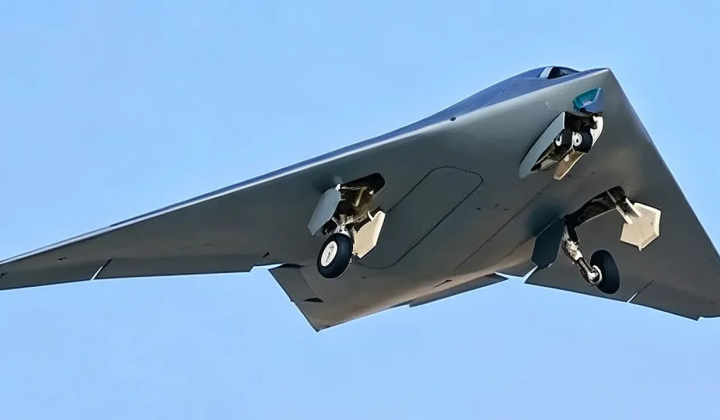
An Inside Look at the GJ-11 Combat Drone
According to НВ — Техно: The Chinese military has officially revealed the GJ-11 unmanned combat aerial vehicle following its successful maiden combat firing. This milestone was announced by the People’s Liberation Army Air Force (PLAAF). CCTV aired a detailed feature on the GJ-11 just two days before the 77th anniversary of the PLAAF's founding.
Designed with stealth in mind, the drone incorporates two internal weapons bays housed within its blended wing-body, capable of carrying up to 2,000 pounds (907 kilograms) of payload. These compartments are configured to deploy both air-to-ground and surface-to-ground munitions.
Design Features and Capabilities of the GJ-11
The GJ-11's architecture follows a tailless blended-wing design common among modern UAVs. It is powered by a WS-13 turbofan engine featuring a flattened exhaust outlet integrated into the upper rear fuselage. At the front, a trapezoidal glazed nose cone contains an EO/IR sensor suite, enhancing its combat surveillance and targeting abilities.
Two female drone operators from the PLAAF’s inaugural UAV unit took part in the drone’s first combat firing. Shi Xiaoran, one of these operators, shared her experience:
"Initially, clouds obscured the target. After a second pass, I located it and successfully deployed the weapon to hit the target." Shi Xiaoran, UAV Operator
The GJ-11 is designed to work alongside manned fighter jets, performing a range of missions including:
- Precision airstrikes
- Suppression of enemy air defenses (SEAD)
Control is managed through a "human-in-the-loop" (HITL) system, with semi-autonomous modes available to support mission flexibility.
Alongside UAV advancements, China is making significant strides in developing the supersonic passenger aircraft TMS-10. Currently entering a complex development phase, the TMS-10’s first test flight is anticipated by the end of 2026. The Tianmushan Laboratory, supported by Beihang University, leads the project. Wind tunnel testing, flight control system design, and airframe construction are all complete, with final assembly now underway.
The GJ-11’s testing highlights China’s expanding expertise in unmanned combat systems, which could alter the regional military balance, especially in aerial warfare contexts. Its seamless integration with piloted aircraft opens new tactical options for the PLAAF. Moreover, China’s push into supersonic aviation signals its ambition to become a dominant force in global aerospace technology, potentially reshaping the commercial aviation landscape.
As China advances its military capabilities, the recent developments in the GJ-11 drone are complemented by the testing of the Type 076 landing ship Sichuan, which is equipped with an electromagnetic catapult designed for the upcoming GJ-21 strike drones. This integration of advanced technologies highlights China's strategic focus on enhancing its aerial fleet's operational efficiency and versatility. For a deeper understanding of these advancements, read more about the Sichuan landing ship's capabilities here.

Read also