Former POW Detained at Border, Highlighting Exit Permit Issues for Released Soldiers

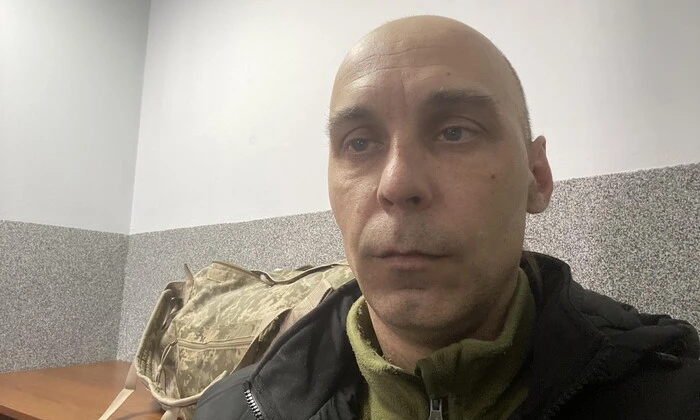
Yevhen Shybalov's Border Detention
According to Главком: Yevhen Shybalov, a former prisoner of war and journalist, was stopped at the Rava-Ruska border crossing while attempting to travel to Warsaw to attend a conference at Harvard University. After a period of questioning, he was eventually allowed to proceed abroad. This incident has raised significant questions regarding the travel rights of former Ukrainian POWs, a complex legal area shaped by ongoing martial law.
Ukraine's Ministry of Defence clarified that military personnel released from captivity are entitled to a deferment from further service. However, this status must be formally arranged in advance. During the stop, border guards sent a query to the central office of the State Border Guard Service, indicating a need to verify Shybalov's specific status before permitting his departure.
Yevhen Shybalov's Background
Yevhen Shybalov has a diverse background in both journalism and military service. He previously worked as a journalist for the publication Dzerkalo Tyzhnia in Donetsk and began humanitarian work with the Center for Humanitarian Dialogue in 2015. On the first day of Russia's full-scale invasion, he voluntarily joined the Armed Forces of Ukraine as a rifleman-grenadier. In May 2022, he was captured and spent seven months in Russian captivity. After his release, he served as a drone operator, was later demobilized, and headed the Eurointegration Directorate at the Ministry for Veterans Affairs. Subsequently, he worked as an independent consultant.
Yevhen Shybalov remarked: 'On one hand, former prisoners of war are not subject to mandatory mobilization... On the other, former POWs retain the right to voluntarily return to the military, so they formally remain liable for service. That is precisely why I was not initially allowed to leave.'
He added that the border guards persuaded him to take the next available bus, offering him a complimentary ride to the airport in Warsaw. 'We agreed that upon my return, I would visit my Territorial Recruitment Center and obtain that necessary deferment,' he noted.
The Ministry of Defence further specified that 'individuals released from captivity do indeed have the right to a mobilization deferral and, accordingly, to travel abroad.' To do so, they must apply in advance to a Territorial Recruitment Center and Social Support Center or use the online 'Reserve+' service. This case underscores the critical importance for returning POWs of having their documentation properly processed to avoid travel disruptions.
Shybalov's detention highlights the intricate legal status of former prisoners of war in Ukraine and the necessity of following clear procedures to secure exit permits. The Ministry of Defence is emphasizing the need for prior deferment registration, a crucial step for other service members returning from captivity. This situation points to a requirement for further clarification and potential legislative refinement to prevent similar incidents in the future.

Read also