How a Middle East Conflict Could Trigger an Oil Price Shock, Impacting the US, Europe, and China

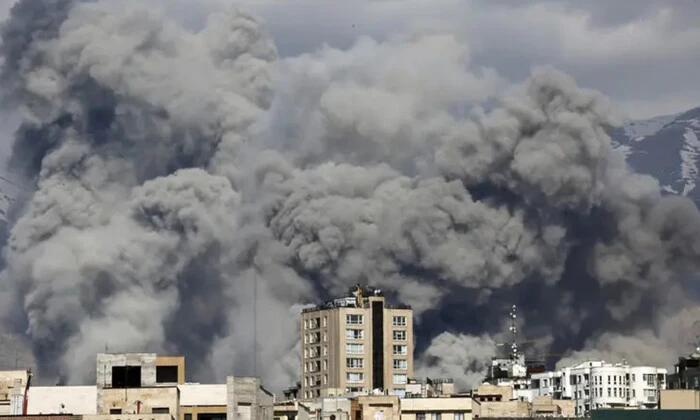
The Economic Fallout of Middle East Tensions
According to Главком: A Bloomberg analysis warns of the potential global economic consequences stemming from the conflict in the Middle East, with a particular focus on world energy markets. The stability of the Strait of Hormuz, a vital chokepoint for roughly 20% of the world's seaborne oil exports, is a critical concern. Any significant disruption there could send oil prices soaring, directly impacting the economies of the United States, Europe, China, and Russia. This underscores the global economy's continued vulnerability to energy supply shocks from geopolitically volatile regions.
Analysts estimate that a prolonged closure of the Strait of Hormuz could drive oil prices up by approximately 80% from pre-war levels. Under this severe scenario, the price per barrel could reach around $108. Such an energy shock would have serious repercussions for the world economy, including:
- A reduction in Eurozone GDP of roughly 0.6%
- A 0.5% contraction in the UK economy
A surge in oil prices to $108 per barrel could also add about 0.8 percentage points to inflation in China's economy. Conversely, Russia stands to benefit from higher energy prices, which could bolster its economic performance. The ripple effects are already being felt in local markets; for instance, as of March 4th, gasoline prices at some stations in Ukraine were approaching 81 hryvnias per liter, reflecting these global price pressures.
Potential Oil Price Scenarios
Given the unpredictable nature of the conflict, analysts also consider less extreme possibilities. In one scenario, oil prices could stabilize at around $80 per barrel. Should a ceasefire be achieved, the price could fall further to approximately $65 per barrel. These forecasts highlight the outsized importance of the Strait of Hormuz for global economic and energy market stability.
The issue of energy price stability in the context of the Middle East conflict illustrates the deep interconnection between regional politics and worldwide economic trends. The world market's heavy reliance on oil transiting the Strait of Hormuz creates significant risks for economies that may be forced to adapt to new pricing realities. Consequently, developments in this region remain under close scrutiny by international analysts and economists.

Read also