Ukraine's Constitutional Court Rules on Public Service

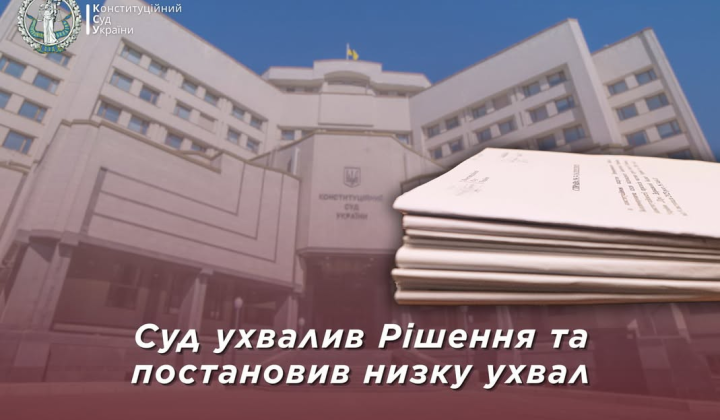
Ukraine's Constitutional Court Issues Ruling
According to Конституційний суд: On January 20, 2026, Ukraine's Constitutional Court reached a decision on the constitutionality of several articles of Ukrainian law during a plenary session. The case, initiated by the Ukrainian Parliament Commissioner for Human Rights, pertains to significant legislative matters, specifically laws concerning public service. This ruling is part of the Court's ongoing role in interpreting the nation's foundational legal framework.
Key Details of the Proceedings
The Grand Chamber continued its review of a constitutional petition, which included:
- Article 90, Subsection 1, Paragraph 2, Section XI of the Law of Ukraine 'On Public Service' dated December 10, 2015 (No. 889–VIII);
- Part Seven of Article 21 of the Law of Ukraine 'On Service in Local Self-Government Bodies'.
The adopted decision, assigned the number 1-r/2026, is scheduled for publication on January 21, 2026.
Furthermore, the Court examined constitutional petitions regarding:
- Part Four of Article 29 of the Law of Ukraine 'On Protection of the Population from Infectious Diseases' dated April 6, 2000 (No. 1645–III);
- A constitutional complaint filed by Halyna Mykhailivna Nikitina concerning the constitutionality of Point 1, Part One, Article 170 of the Code of Administrative Procedure of Ukraine.
Additionally, the Court declined to initiate constitutional proceedings in a case based on a constitutional complaint from the Private Joint-Stock Company 'Lviv Electric Lamp Plant 'Iskra''.
The Court's decision holds considerable importance for the future development of Ukraine's legal system and for society at large. It addresses fundamental aspects of public administration and health protection that may influence legal practice and the safeguarding of citizens' rights. The publication of the full text on January 21 will provide the public and legal experts with detailed insight into the Court's position and the potential implications for existing legislation.

Read also