War 4.0: Why NATO Armies Risk Preparing for a Past War
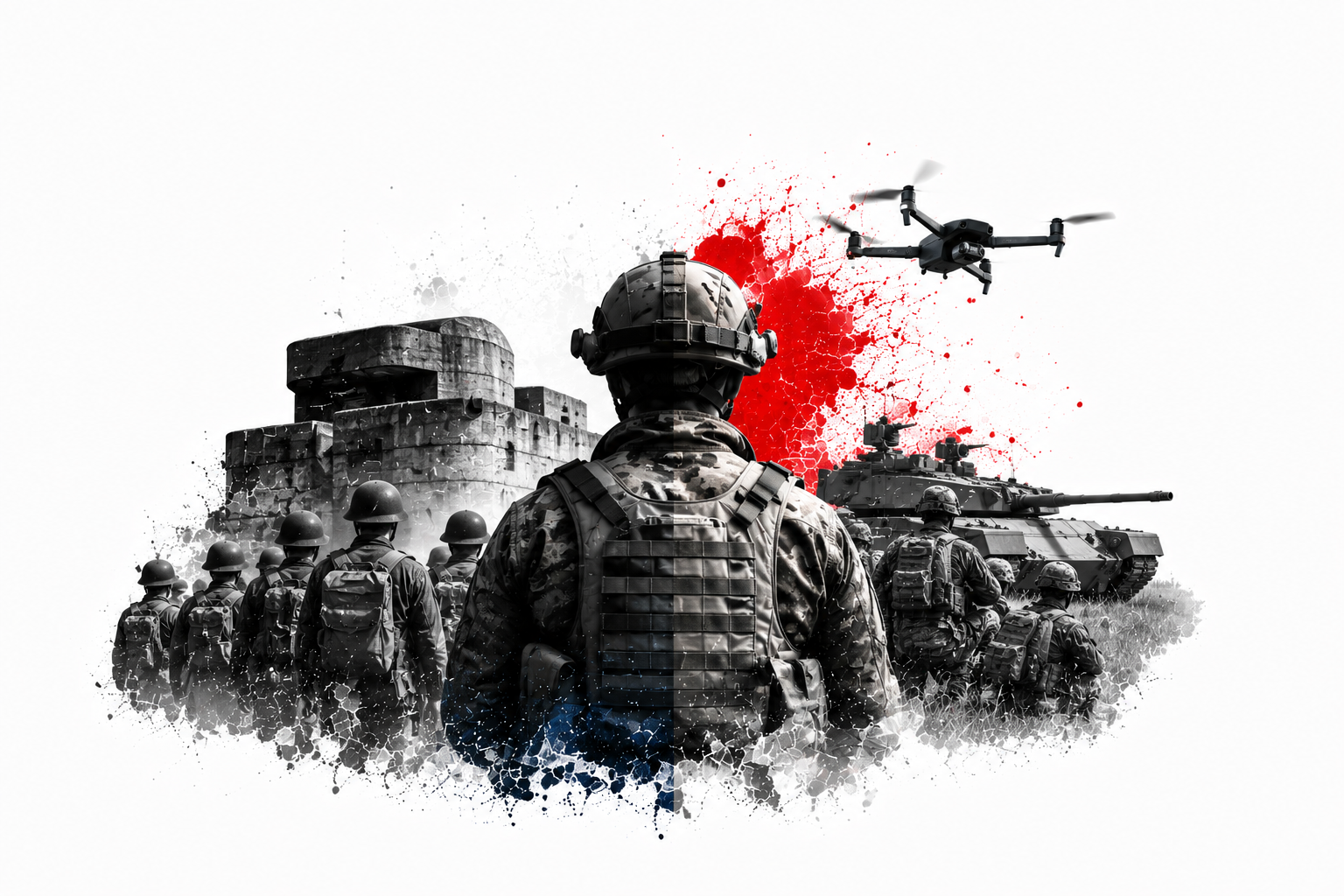
The history of military conflicts has repeatedly demonstrated that states often lose not due to a lack of resources, but due to an inability to adapt to a new reality in time. Victory in a previous war often becomes the reason for strategic overconfidence in the next.
This is exactly what happened in the spring of 1940.
A Lesson Europe Already Ignored Once
After the end of World War I, French military leadership was convinced that it had created a practically impregnable defense system.
The Maginot Line was considered a guarantee of safety, and the French army was deemed the strongest in the world. Headquarters were confident that the Wehrmacht could not overcome the prepared fortifications.
However, the German command proposed a completely different concept of warfare.
Instead of a frontal assault, it utilized speed, maneuvering, and concentration of forces, breaking through the Ardennes. As a result, one of the most powerful armies in Europe lost strategic initiative and was defeated in just a few weeks.
History has shown a simple pattern: a new concept of war can instantly render even the world's best army obsolete.
War Has Changed
Recent events demonstrate that the modern battlefield is increasingly defined not by troop numbers but by technology.
Drones, electronic warfare systems, digital intelligence, management automation, and speed of decision-making are becoming key elements of modern combat operations.
This is why more and more military experts are talking about the transition to War 4.0-a conflict where information, speed of adaptation, and technological advantage often carry more weight than classic troop mass.
A Contrast Between the Training Ground and the Real Front
In the spring of 2026, large-scale NATO exercises Aurora 26 in Sweden provided a platform to compare two different approaches to conducting war.
According to reports from the German publication Welt, Ukrainian soldiers, who have practical experience in modern combat operations, noticed a significant difference between the reality of the front and the exercise scenarios.
While on the modern battlefield, drone systems, electronic warfare tools, and reconnaissance operate almost continuously, the training process largely remains built around administrative procedures, strict regulations, and standard training regimes.
Participants noted that numerous procedural restrictions on drone usage and the high role of regulatory requirements during maneuvers were particularly striking.
The Problem Is Not in the Technology, but in the Speed of Adaptation
Modern warfare is constantly changing.
Tactics can become outdated within a few months, and sometimes even within weeks. This is why the main advantage becomes not the quantity of armament but the ability to quickly change approaches in accordance with new conditions.
For large military structures with a multi-tiered decision-making system, this remains a serious challenge.
A Shortage of Human Resources
Another factor is the personnel issue.
Most European countries face difficulties in staffing their armies. An aging population, competition with the civilian economy, and a declining interest in military service are gradually reducing reserves.
In these conditions, maintaining the necessary troop numbers increasingly depends not only on funding but also on demographic trends.
The Industry Also Has Limits
Equally important is the issue of defense production.
Even under conditions of significant military budget increases, ramping up the production of equipment, ammunition, and weapon systems requires time, skilled personnel, and production capacity.
The military economy does not scale instantly, and logistical constraints can become just as important as the situation directly on the battlefield.
The Main Lesson of History
The events of 1940 remind us that the most dangerous army is not a weak one, but one that is convinced of its own infallibility.
Technologies evolve faster than military doctrines. This is why the main factor for success becomes the ability not only to invest in new weaponry but also to revise one's own approaches to conducting warfare.
History does not literally repeat itself, but it often rhymes. And the greatest risk for any military system is that it continues to prepare for a conflict that has already passed into history.

Read also