Five Peace Conditions for Ukraine Outlined by Leaders of Britain, France, and Germany

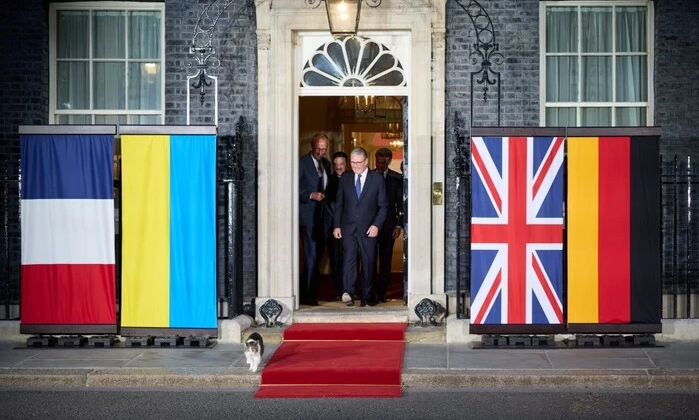
Joint Statement from Top European Leaders
According to Главком: Following talks in London with Ukrainian President Volodymyr Zelenskyy, UK Prime Minister Keir Starmer, French President Emmanuel Macron, and German Chancellor Friedrich Merz released a unified statement detailing the requirements for a just and lasting peace. The three leaders reaffirmed their unwavering support for Ukraine and laid out five specific conditions that must be met to move the peace process forward. This joint declaration comes amid ongoing diplomatic efforts to end the conflict.
- The first condition demands a complete cessation of hostilities. Vladimir Putin must agree to an immediate and unconditional ceasefire.
- The second condition establishes the current front line as the starting point for negotiations. While the actual line of contact will serve as the basis for dialogue, the leaders emphasized that international borders cannot be altered by force. Ukraine retains the sole right to determine its own security arrangements and alliances.
- The third condition focuses on legally binding security guarantees for Ukraine. Following a ceasefire, Kyiv must receive robust assurances, including the potential deployment of a Multinational Force. These guarantees are grounded in commitments made in Berlin in December 2025 and in Paris in January 2026.
- The fourth condition concerns frozen Russian assets. These funds will remain seized until Russia fully ceases its aggression and pays compensation to Ukraine for damages.
- The fifth condition addresses the protection of European security interests. Any agreement affecting the EU or NATO requires the consent of all their member states.
During the negotiations, President Zelenskyy published an open letter to Vladimir Putin on June 4, proposing a personal meeting in a neutral country and a full ceasefire for the duration of the talks. However, Putin’s response was critical, dismissing the proposal as lacking purpose and questioning the point of such a meeting.
Upcoming International Summits
Looking ahead, the leaders discussed the upcoming G7 summit in Évian and the NATO summit in Ankara, where issues of support for Ukraine will be on the agenda. These events are designed to reinforce efforts toward achieving long-term peace and stability in the region.
The joint statement from the leaders of Britain, France, and Germany underscores a clear stance on supporting Ukraine and the necessity of meeting concrete conditions to reach a peace agreement. These conditions highlight the need for international security guarantees and financial reparations, which could serve as a foundation for further negotiations. At the same time, the Russian reaction to Zelenskyy’s proposal reflects the complexity and tension of the situation, potentially complicating the implementation of these initiatives.
As the leaders of Britain, France, and Germany outline their peace conditions for Ukraine, the focus on direct dialogue becomes increasingly vital. In a related development, Zelenskyy has expressed his willingness to engage in direct negotiations with Putin, signaling a potential shift in the dynamics of the ongoing conflict and the pursuit of a diplomatic resolution.

Read also