Russian ‘Hero’ Who Led Sieverodonetsk Assault Killed in Action

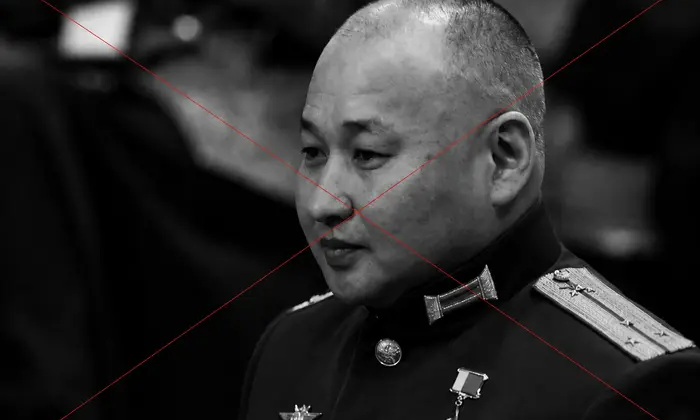
Death of Naran Ochir-Goryaev
According to Главком: Senior Lieutenant Naran Ochir-Goryaev, a decorated Russian soldier who received the Hero of Russia award for commanding the assault on Sieversk in Donetsk region, has been killed. The announcement was made by the head of Kalmykia, Batu Khasikov. Born in the town of Lagan in Kalmykia, Ochir-Goryaev served in the Russian police before the full-scale invasion, with prior deployments to Chechnya and Dagestan. In 2022, he volunteered for the war against Ukraine, rising from a driver to the commander of an assault company.
Service Record and Key Achievements
Ochir-Goryaev was part of the 6th Separate Guards Motor Rifle Brigade, which originated from the so-called people’s militia of the Luhansk People’s Republic (LNR). Before 2022, this unit was considered an illegal armed formation that had occupied parts of Luhansk region since 2014. After the full-scale invasion began, Russia integrated the brigade into its regular army and renamed it the Lysychansk Brigade for its role in capturing that city in summer 2022. The unit later fought in the battle for Soledar in Donetsk region.
Ochir-Goryaev’s most notable achievement was leading the assault on Sieversk from December 2024 through 2025. Russian sources claim his company of 84 soldiers seized over 80 residential buildings and destroyed 36 Ukrainian strongpoints. On December 11, 2025, he personally reported to Putin via video link, and on December 17, 2025, received the Gold Star medal directly from the president for his role in the Sieversk operation.
In February 2026, the United Russia party considered him as a candidate for the State Duma from Kalmykia. Sieversk in Donetsk region was captured by Russian forces after prolonged fighting. Ochir-Goryaev was survived by four children. His combat record includes participation in key battles that have become significant events in the context of the Russia-Ukraine war.
The elimination of Ochir-Goryaev could have a substantial impact on the morale of Russian military units, especially amid growing frontline tensions. His role in the Sieversk assault and subsequent political ambitions highlight how he was a key figure both on the battlefield and in regional politics. This event may also reflect shifting dynamics in the war, as the loss of commanders can affect the strategies and offensive plans of Russian forces.

Read also