Mikhail Boychuk: Pioneer of Ukrainian Monumental Art and Founder of Boychukism

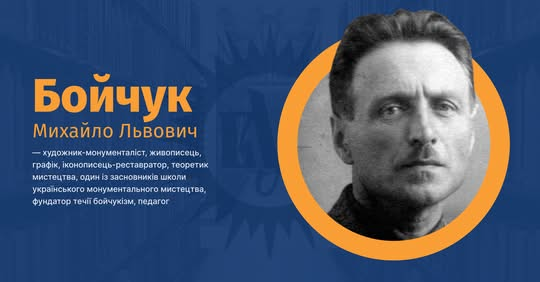
Mikhail Lvivovych Boychuk
According to Велика українська енциклопедія: Mikhail Lvivovych Boychuk stands as a prominent figure in Ukrainian art history, renowned for his role as a monumental painter, art theorist, and educator. Born on October 30, 1882, in the village of Romanivka, now part of the Ternopil district in Ukraine, he became a central founder of the Ukrainian monumental art school and the originator of the art movement known as Boychukism. His life came to a tragic end on July 13, 1937, in Kyiv.
Boychuk’s artistic practice was diverse, blending monumental painting with easel painting, graphic arts, and icon restoration. Drawing inspiration from Byzantine monumental art, ancient Ukrainian frescoes, and traditional iconography, he developed a unique visual language that significantly impacted Ukrainian cultural heritage. Beyond his creative work, Boychuk played a crucial role in advancing higher art education in Ukraine by establishing his own artistic school and mentoring the next generation of artists.
Teaching Legacy and Influence
Throughout his career as an educator, Boychuk trained numerous gifted students, including:
- Oleksandr Bizyukov
- Kost Hvozdik
- Oleksandr Kravchenko
- Mykola Rokytsky
- Mikhail Shekhtman
- Mikhail Yunak
He was an active member of the Shevchenko Scientific Society from 1912 and joined the Ukrainian Scientific Society in 1917. Boychuk was also the brother of T. Boychuk and married to S. Nalepinska-Boychuk. His contributions continue to inspire Ukrainian artists and cultural practitioners both within Ukraine and internationally.
Boychuk’s legacy remains a vital part of Ukraine’s cultural identity. The movement he founded, Boychukism, bridges ancient traditions with modern innovations, influencing contemporary artistic trends. His memory is honored through exhibitions, scholarly conferences, and ongoing research that celebrate his monumental impact on art and education. For international audiences, understanding Boychuk’s work offers insight into the rich tapestry of Eastern European art history and its enduring influence today.

Read also