Ants Outmaneuver Artificial Intelligence in Maze Challenges

Swarm Intelligence Takes the Lead
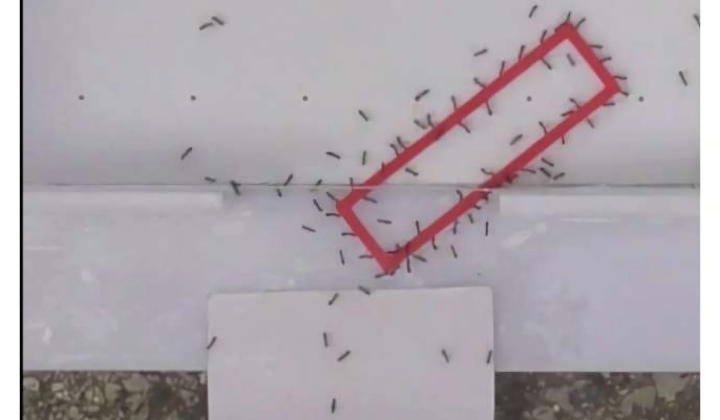
According to НВ — Техно: When it comes to finding a way out of a maze, ant teams beat AI. Researchers at the Weizmann Institute of Science observed groups of longhorn crazy ants (Paratrechina longicornis) hauling objects through specially designed labyrinths. The results showed that larger ant groups handled tricky maze geometries far better than smaller ones. Computer simulations, however, only matched this performance when the virtual agents were equipped with specific "ant-like" capabilities. This finding adds to a growing body of work on how simple organisms use collective behavior to solve complex tasks.
Led by Ofer Feinerman, the study appeared in the Journal of the Royal Society Interface on August 4. The team used 3D printing to craft tiny objects with precisely calculated masses, then soaked them in cat food to encourage the ants to participate. The mazes themselves were laser-cut and built in several scaled versions. Throughout the trials, the weight-to-ant ratio was kept constant. For simple mazes, small and large groups performed equally well, but as the geometry got harder, larger teams gained a clear edge.
Inside the Maze Experiments
In computer models that relied on physical forces such as gravity, the simulated agents could only jostle loads free in the easiest mazes. To improve results, the simulations had to allow agents to shift the point where force is applied and change their pulling direction according to upcoming passages. These limitations suggest that real ants follow universal collective adaptation algorithms rather than simple mechanistic rules.
This work highlights what makes ant colonies special: their collective behavior and ability to adapt under challenging conditions.
The implications extend beyond biology. The data are expected to inform swarm robotics and artificial intelligence design, where decentralized interaction can create highly efficient systems. Next, the researchers aim to determine whether ant flexibility emerges from individual brains or as a property of the whole colony. For engineers, such natural examples of decentralized problem-solving are becoming increasingly relevant, and the findings also open new avenues for studying social behavior and evolutionary strategies in other species.
This fascinating research on ant behavior opens up new avenues for understanding collective intelligence in various species. For instance, recent findings about octopuses and their unique cognitive abilities challenge traditional views on social brain theory. Exploring these diverse adaptations in the animal kingdom can provide deeper insights into how different organisms tackle complex challenges.

Read also