3D-Printed Ultra-Lightweight Polymer Hinges Weighing 1.4 Grams Revolutionize Satellite Solar Panel Deployment

Breakthroughs in Space Technology
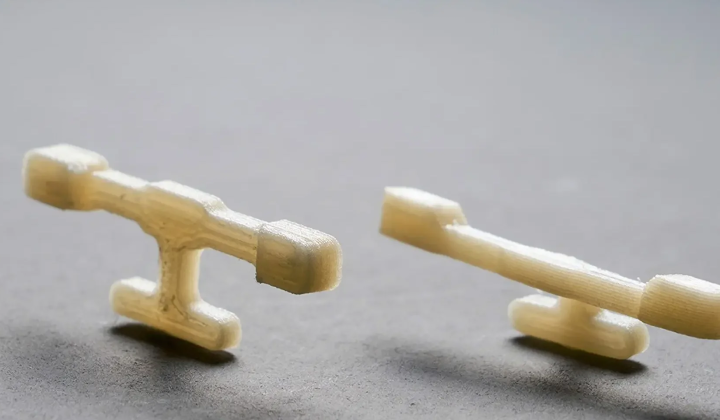
According to НВ — Техно: Scientists have engineered polymer hinges weighing just 1.4 grams, designed specifically to deploy satellite solar panels. These hinges are produced through 3D printing using a specialized shape-memory polymer. This innovative material allows the hinges to maintain a compact form during transport and then automatically straighten when heated to 140 degrees Celsius once in orbit. This eliminates the need for heavy metal mechanisms, offering a significant advantage in spacecraft design.
Compared to traditional metal hinges, these polymer versions are approximately 93% lighter, making them highly suitable for space applications where every gram counts. The hinges take around 60 seconds to fully unfold, and each unit requires roughly 15 minutes to print. Researchers have also explored 4D printing techniques, which embed temperature-responsive properties directly during the plastic sintering process, enhancing the material's performance for aerospace components.
Testing and Future Applications
Prototype hinges underwent rigorous thermal testing in vacuum chambers and received certification confirming they emit no harmful gases in space environments. German Orbital Systems is preparing the first mission to test these polymer hinges under real orbital flight conditions. This project highlights the critical role of innovation in reducing satellite system weight and improving space mission efficiency.
The development of these ultra-light polymer hinges marks a major advancement in satellite technology optimization. Lowering the weight of satellite components can significantly improve launch efficiency and reduce costs. Utilizing advanced materials like shape-memory polymers opens new pathways for manufacturing space-grade parts, potentially shaping the future of aerospace engineering and mission design.
This innovative development in lightweight polymer hinges aligns with the recent achievements in space manufacturing, such as the successful 3D printing of structures in open space by a German startup. The advancements in in-space 3D printing underscore the growing potential of additive manufacturing technologies to revolutionize satellite and spacecraft design, paving the way for more efficient and cost-effective missions.

Read also