German Startup Orbital Matter Achieves First 3D Printing of a Structure in Open Space Orbit

Breakthrough 3D Printing Experiment Conducted in Space
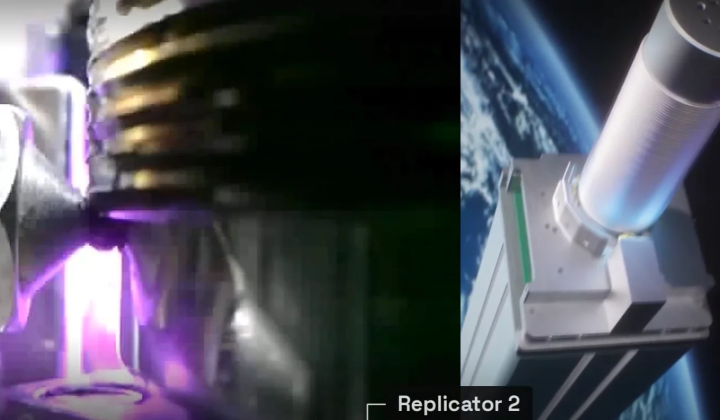
According to НВ — Техно: Orbital Matter, a German startup, has successfully demonstrated 3D printing of structures directly in open space using their small satellite, Replicator 2. During this mission, the satellite produced a half-meter-long plastic beam in orbit under vacuum conditions. This marks the first-ever case of 3D printing performed in free flight outside the sealed modules of the International Space Station (ISS). The satellite was launched during a SpaceX mission in the summer.
The satellite carries four 3D printers that fabricate rigid cylindrical beams from resin layers hardened by ultraviolet light. The printed beam measured 0.5 meters, limited by the available resin supply. Engineers believe the technology could eventually produce rods up to 100 meters long. For perspective, Starlink V2 panels measure about 20 meters. Orbital Matter’s technology is designed for future satellites, including large orbital data centers that must fit within a rocket’s fairing despite their size.
Future Plans and Industry Impact
Founded in 2022, Orbital Matter has already secured $3 million in seed funding. The company collaborates with the European Space Agency and Thales Alenia, the latter of which co-developed the Replicator 2 satellite. Looking ahead, a 2028 mission is planned featuring a larger printer and a 5 kW solar panel, with ambitions to deploy solar panels exceeding 100 kW per wing by 2030.
Robert Ignatyshin, a company representative, explained: "This is why we equipped the satellite with multiple printers. We chose to learn and adapt our software in orbit rather than spending years testing every option on Earth."
Two of the satellite’s printers were intended to deploy a flexible solar panel, but one malfunctioned due to an anomaly.
This successful demonstration highlights the transformative potential of 3D printing in space, which could revolutionize how components are manufactured and repaired without relying on Earth-based resources. On-orbit production technology promises to reduce launch costs by minimizing material shipments from Earth and enables more agile responses to mission demands. Continued advancements in this field may unlock new opportunities for expanding space infrastructure.
As advancements in space technology continue, the recent launch of the Obria Nano Satellite for Ukraine by Ukrainian company Himera and Danish GomSpace showcases the growing collaboration in the aerospace sector. This mission highlights the increasing importance of innovative satellite technologies, paralleling Orbital Matter’s groundbreaking achievements in 3D printing in space, which could revolutionize future satellite designs and functionalities.

Read also