NASA Innovates More Precise Tracking of Earth's Center of Mass Shifts Affecting Navigation

Advancing Accuracy in Monitoring Earth's Center of Mass Movement
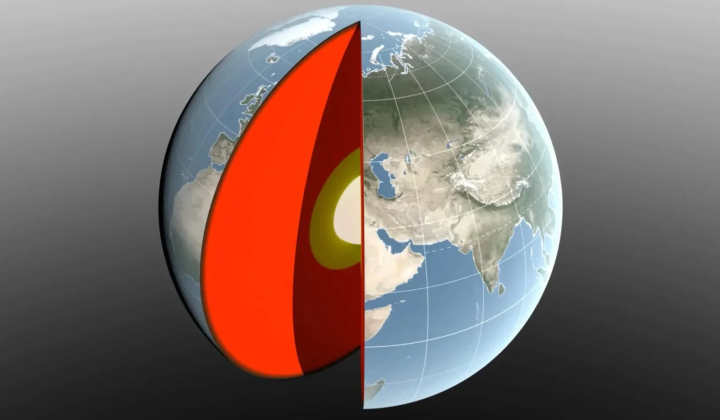
According to НВ — Техно: On October 8, NASA unveiled a refined technique to measure the subtle shifts in Earth's center of mass, which fluctuate due to seasonal redistribution of water, ice, and atmospheric mass. These displacements, amounting to just a few millimeters from the planet's geometric center, have significant consequences for satellite navigation systems and geospatial measurements.
This breakthrough was led by geophysicist Donald Argus at NASA's Jet Propulsion Laboratory (JPL), in collaboration with researchers from the University of Nevada, University of Montana, and the German Research Centre for Geosciences (GFZ). Utilizing data from the LAGEOS 1 and LAGEOS 2 satellites, equipped with laser retroreflectors, the team reevaluated Earth's center of mass position. Previous international assessments in 2017 and 2023 showed discrepancies of about 7 millimeters. Argus's recent analysis reveals that the annual displacement is roughly half the magnitude previously estimated eight years ago.
Seasonal Drivers Behind Earth's Center of Mass Variations
Fluctuations in Earth's center of mass occur in response to seasonal phenomena, such as:
- In March, snow accumulation peaks across North America and Eurasia, pushing the center of mass approximately 3 millimeters toward the North Pole.
- During April, the Amazon basin gathers nearly 2,400 gigatons of rainfall, shifting the center around 2.2 millimeters toward South America.
- Monsoon rains in Southeast Asia reach their maximum in November, adding about 600 gigatons of mass.
- Between August and October, melting ice and precipitation increase ocean mass, nudging the center of mass toward the southern Pacific Ocean.
- On December 21, dense cold winter air causes the center to move toward Arabia, Asia, and northern Africa.
- A similar effect occurs on June 21 over South America and southern Africa.
These findings align closely with gravity measurements from the GRACE-FO satellite mission launched in 2018, which tracks monthly variations in Earth's gravitational field linked to water movement. Precisely pinpointing the center of mass is essential for enhancing satellite navigation accuracy and Earth surface height measurements.
Looking ahead, NASA and GFZ are preparing the GRACE-Continuity (GRACE-C) mission, scheduled for launch by the end of 2028. This mission will extend a nearly 25-year record of monitoring Earth's water and mass shifts. Felix Landerer emphasized that
“improved reference frames can significantly advance mapping, navigation, logistics, and precision agriculture.”
This new approach to tracking Earth's center of mass marks a pivotal step in geophysics, promising to elevate the precision of satellite-based systems. The implications are broad, impacting navigation technologies, climate change monitoring, and natural resource management. Moreover, the use of satellite data to measure these subtle shifts highlights technological progress that supports a deeper understanding of global environmental dynamics.

Read also