The invasion of locusts has been recorded in four regions

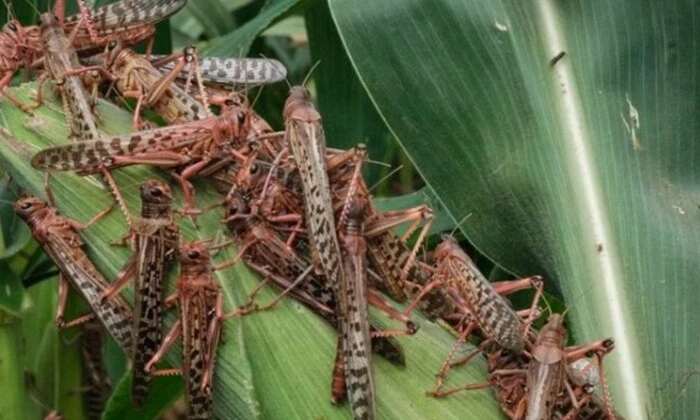
According to glavcom.ua: The Kushugum Village Council has created a Coordination Headquarters for the fight against locusts to coordinate actions in this area. The main food source for locusts is reeds and wild grasses, so industrial crops have not suffered significantly. Work is being done to localize the pest and treat non-agricultural land.
In the Zaporizhia and Kherson regions, measures are being taken to eliminate locusts. In particular, a special plant protection regime has been introduced in the Zaporizhia region to completely eradicate locust outbreaks.
A special plant protection regime is also in place in the Kherson region to eliminate locusts. Measures have already been taken over an area of 297 hectares, of which 27 hectares are under sunflower crops. Phytosanitary monitoring has shown the absence of locusts in treated areas and a decrease in the pest population.
Due to the migration of locusts in the southern regions of the Republic of Moldova, monitoring is being carried out in the Odesa region. The Bolhrad district has recorded the migration of locusts in fields with harvested crops. Treatments with insecticides have been conducted to prevent the spread of the pest, but a special plant protection regime has not been established due to the small number of locusts.
Currently, in the Dnipropetrovsk region, surveys are being conducted to detect locusts. Earlier, an expert explained the reasons for the spread of this pest.
Zaporizhia and Kherson regions are engaged in the elimination of locusts through various measures, including a special plant protection regime. Odesa region is conducting monitoring to prevent the spread of the pest. Dnipropetrovsk region is conducting surveys to detect locusts.

Read also