German Engineers Develop Satellite-Free Navigation System for Autonomous Mars Robot Swarms

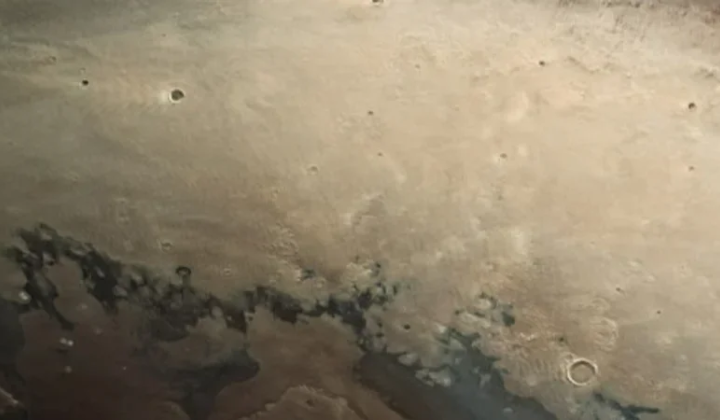
Innovative Navigation for Self-Guided Robot Teams on Mars
According to НВ — Техно: A team of German engineers is pioneering a navigation solution designed specifically for autonomous robot swarms tasked with exploring Mars without relying on satellite-based positioning. The project, named VaMEx-ARES, kicked off in October 2026 and is planned to run for three years. It is backed by the German Aerospace Center, which has allocated approximately $1.54 million in funding.
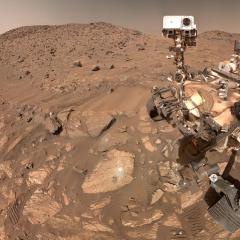
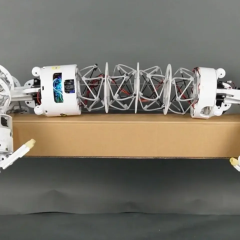
This cutting-edge navigation approach combines star and solar sensors with a network of radio beacons. Since Mars lacks a satellite navigation infrastructure like GPS on Earth, the research team plans to equip a swarm of flying drones, walking robots, and wheeled vehicles with this hybrid system to enable detailed surface and cave exploration. The effort is led by Professor Guido Dietl from the University of Würzburg.
The VaMEx Initiative and SkyCAM Atmospheric Monitoring
VaMEx-ARES is part of the broader VaMEx initiative focused on investigating the vast Valles Marineris canyon system on Mars, stretching about 1,864 miles. Alongside navigation, the project includes the development of SkyCAM, an advanced camera system under the guidance of Professor Hakan Kayal from the university. SkyCAM is engineered to automatically detect atmospheric phenomena such as:
- lightning
- cloud formation
- meteors
To validate SkyCAM’s capabilities, upcoming tests are planned during the AMADEE-27 analog mission scheduled to take place in Portugal from April 5 to 18, 2027.
During these trials, two or three stations will be deployed to synchronize data collection and accurately track the trajectories of moving objects. It is important to note that these technologies are still in development stages and will undergo rigorous field and analog testing before any deployment on Mars.
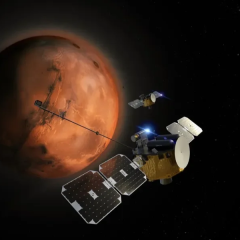
Separately, NASA carried out a new orbital maneuver in November 2026 as part of the ESCAPADE mission to send probes to Mars. The first probe performed its closest Earth flyby on November 7 at an altitude of roughly 1,600 km, while the second followed on November 9 at about 1,050 km. Both probes activated their engines for around nine minutes, marking a significant milestone in preparing for upcoming Mars missions.
Developing a reliable navigation system for autonomous robots on Mars represents a crucial step forward, as conventional positioning methods cannot function without a satellite network. The integration of atmospheric sensing technologies like SkyCAM highlights the scientific community’s drive to deepen understanding of Martian weather patterns, which will be vital for future exploration efforts. Ongoing advances in navigation and their testing in Earth-based Mars-like conditions through missions like AMADEE-27 demonstrate substantial progress toward enabling fully autonomous planetary exploration.
As advancements in space exploration continue, NASA's recent maneuvers with the ESCAPADE probes showcase innovative technologies that complement projects like VaMEx-ARES. These efforts highlight the growing importance of autonomous systems in navigating the complexities of Mars. To learn more about how these groundbreaking missions are shaping our understanding of the Red Planet, explore the details of NASA's latest engine-powered flyby.

Read also