German Researchers Develop CALiK Photocatalyst That Triples Hydrogen Peroxide Production

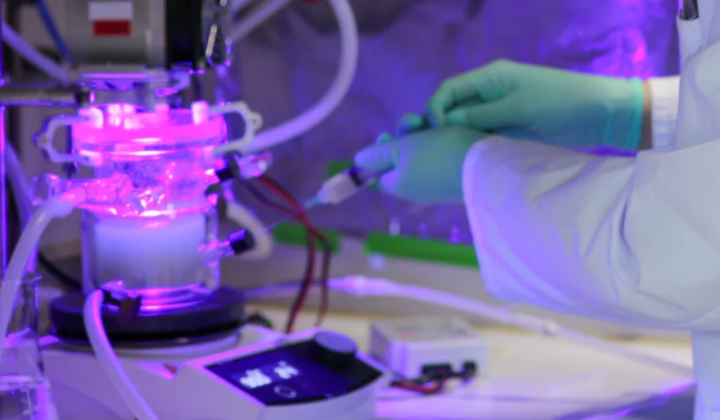
Breakthrough Photocatalyst Boosts Hydrogen Peroxide Output
According to НВ — Техно: Hydrogen peroxide, a staple in many first-aid kits, can now be produced in significantly higher quantities thanks to a novel atomic rearrangement technique developed by chemists.
Scientists at Germany's Max Planck Institute have engineered an advanced photocatalyst named CALiK, based on carbon nitride, featuring a precisely ordered arrangement of lithium and potassium atoms. Laboratory experiments revealed that CALiK generates hydrogen peroxide at three times the rate of conventional carbon nitride photocatalysts. These findings were published in the journal Advanced Materials.
Compared to its predecessor CALi, which contains only lithium, CALiK demonstrated approximately 40% greater efficiency. The performance of carbon nitride photocatalysts is often hindered by rapid recombination of electrical charges during light absorption. However, the strategic incorporation and positioning of lithium and potassium ions within the carbon nitride framework significantly improved charge separation, enhancing overall catalytic activity.
Innovative Synthesis and Practical Applications
The synthesis of CALiK involved heating carbon and nitrogen crystals together with lithium chloride and potassium chloride. While the crystals used are well-known, applying them to produce carbon nitride compounds represents a new achievement in materials chemistry. Hydrogen peroxide produced through this method has widespread uses, including as a disinfectant, bleaching agent, and in various industrial processes.
Anna Lo Presti, one of the lead researchers, emphasized: "This is the first time we have shown that not just the type or amount of ions matters, but also their specific placement within the lattice."
This advancement by German chemists has the potential to revolutionize hydrogen peroxide manufacturing by lowering energy consumption and simplifying processes that traditionally require multiple steps.
The enhanced production efficiency could impact numerous sectors, particularly healthcare-where hydrogen peroxide is vital for sterilization-and industry, which relies on it as a key component in many manufacturing workflows. Improving yield while reducing costs aligns with the growing global emphasis on energy conservation and environmental sustainability.
As innovations in catalysis continue to emerge, the development of a new aluminum-based catalyst by Chinese researchers offers further insights into enhancing energy storage solutions. This breakthrough, aimed at reducing wear in sodium-sulfur batteries, highlights the ongoing advancements in material science that complement the recent progress in hydrogen peroxide production. For more details on this related research, see the full article on the aluminum atom-based catalyst.

Read also