Dinosaur Extinction Theory Revised After New Asteroid Analysis

Dinosaur Extinction Theory Revised After New Asteroid Analysis
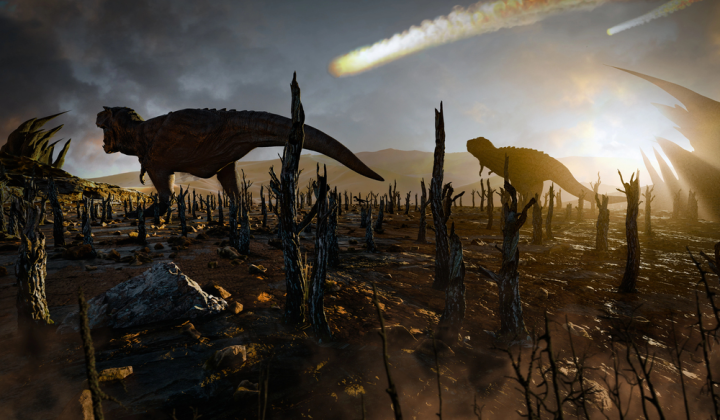
According to Radiotrek — Світ: Around 66 million years ago, a massive object struck the Earth near what is now Mexico's Yucatán Peninsula. Known as the Chicxulub asteroid, new research reveals it belonged to a rare class of space rocks called carbonaceous chondrites. Unlike earlier assumptions, this asteroid contained far less sulfur than previously thought. Instead of sulfur, scientists now believe the mass die-off-which wiped out over 75% of all species-was driven by dust, crustal debris, and soot from enormous wildfires that blocked sunlight for extended periods.
Carbonaceous chondrites make up only about 5% of all known meteorites and hold material dating back to the formation of the solar system. The new findings shift the focus away from gas-induced global cooling and toward a scenario where a thick cloud of particles-including pulverized rock and combustion byproducts-caused a severe and prolonged drop in temperatures. This drastic environmental change made conditions unsustainable for most life forms.
Implications of the Discovery
These insights could fundamentally change how scientists understand the chain of events leading to one of Earth's most famous extinction events. They also open up fresh avenues for future research into asteroid impacts and their long-term effects on the planet.
The revised analysis of the Chicxulub asteroid underscores the value of studying cosmic objects to decode major geological and biological shifts on Earth. Rethinking what caused the dinosaurs' demise may influence not only extinction studies but also broader theories about how life evolves in response to planetary catastrophes. This breakthrough could encourage the scientific community to reexamine other impact-related hypotheses throughout Earth's history.
In light of these revelations about the Chicxulub asteroid, it is intriguing to consider how recent findings have also identified a new type of asteroid through Antarctic dust samples. This discovery not only expands our understanding of cosmic materials but also highlights the diverse origins of asteroids that could impact Earth. To explore this fascinating connection and its implications for planetary science, read more about the new asteroid type identified by scientists.

Read also