Flexible-Mouthed Fossil Cicada Species Cretodorus noonoo from 99 Million Years Ago Discovered

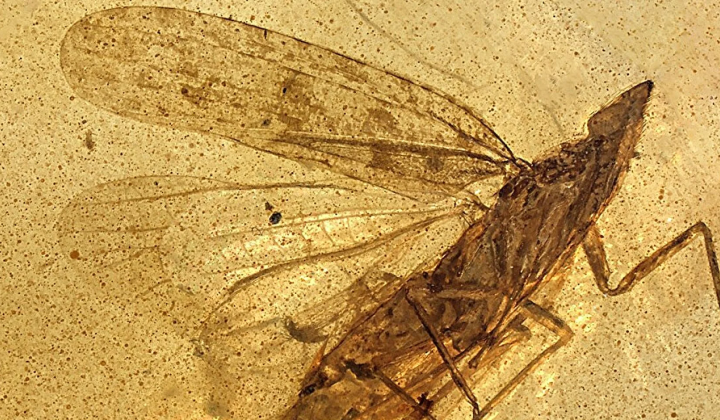
A Dinosaur-Era Insect Revealed
According to НВ — Техно: Researchers have identified a new species of ancient cicada-like insects distinguished by a unique flexible proboscis. A team of biologists from Tel Aviv University, collaborating with Chinese scientists, described this species named Cretodorus noonoo. These insects lived around 99 million years ago, with their fossils preserved in amber from Myanmar. This discovery sheds light on insect adaptations during the Cretaceous period and their ecological interactions with trees.
Distinctive Features of Cretodorus noonoo
The standout characteristic of Cretodorus noonoo is its exceptionally long and flexible mouthpart, measuring twice the length of its body. This proboscis contained transverse folds that allowed remarkable flexibility, along with two grooved lobes at its tip designed to slip into tree bark crevices and anchor securely. Fossil evidence showing the proboscis in a bent configuration confirms this flexibility. This species belongs to the family Neazoniidae.
The research was conducted by a team including Dolev Fabrikant, Leoninas-Romanos Davranoglu, and Yanzhe Fu. Interestingly, the species name Cretodorus noonoo honors the character Noo-Noo from the children's television show 'Teletubbies.' This finding highlights the rich diversity of life forms that thrived alongside dinosaurs.
In addition to Cretodorus noonoo, a new fossil six-legged species named Chosha praecursor, dating back approximately 324 million years, was described in 2026 from the Tesnus Formation in West Texas. This discovery provides valuable insight into the transition of insects from aquatic to terrestrial environments. The study was led by Professor Chenyang Cai from the Nanjing Institute of Geology and Paleontology and Erik Tihelka from the University of Cambridge.
Discoveries like these reveal critical evolutionary changes that occurred millions of years ago, enhancing scientists' understanding of how insects adapted to diverse habitats on Earth.
The identification of Cretodorus noonoo and other ancient insects emphasizes the significance of paleontological research in unraveling evolutionary history. Examining such fossils helps clarify how environmental shifts influenced the development of Earth's biological diversity. This, in turn, underscores the importance of conserving natural resources and ecosystems in our modern world.
As the study of ancient life continues to unveil remarkable discoveries, recent findings related to independent flight evolution in dinosaurs have further expanded our understanding of the ecological dynamics during the Cretaceous period. These insights not only highlight the adaptability of various species but also illustrate the intricate relationships between insects and their environments millions of years ago.

Read also