A Promise Without Money: What Lies Behind von der Leyen's Plan for Ukraine for 2027

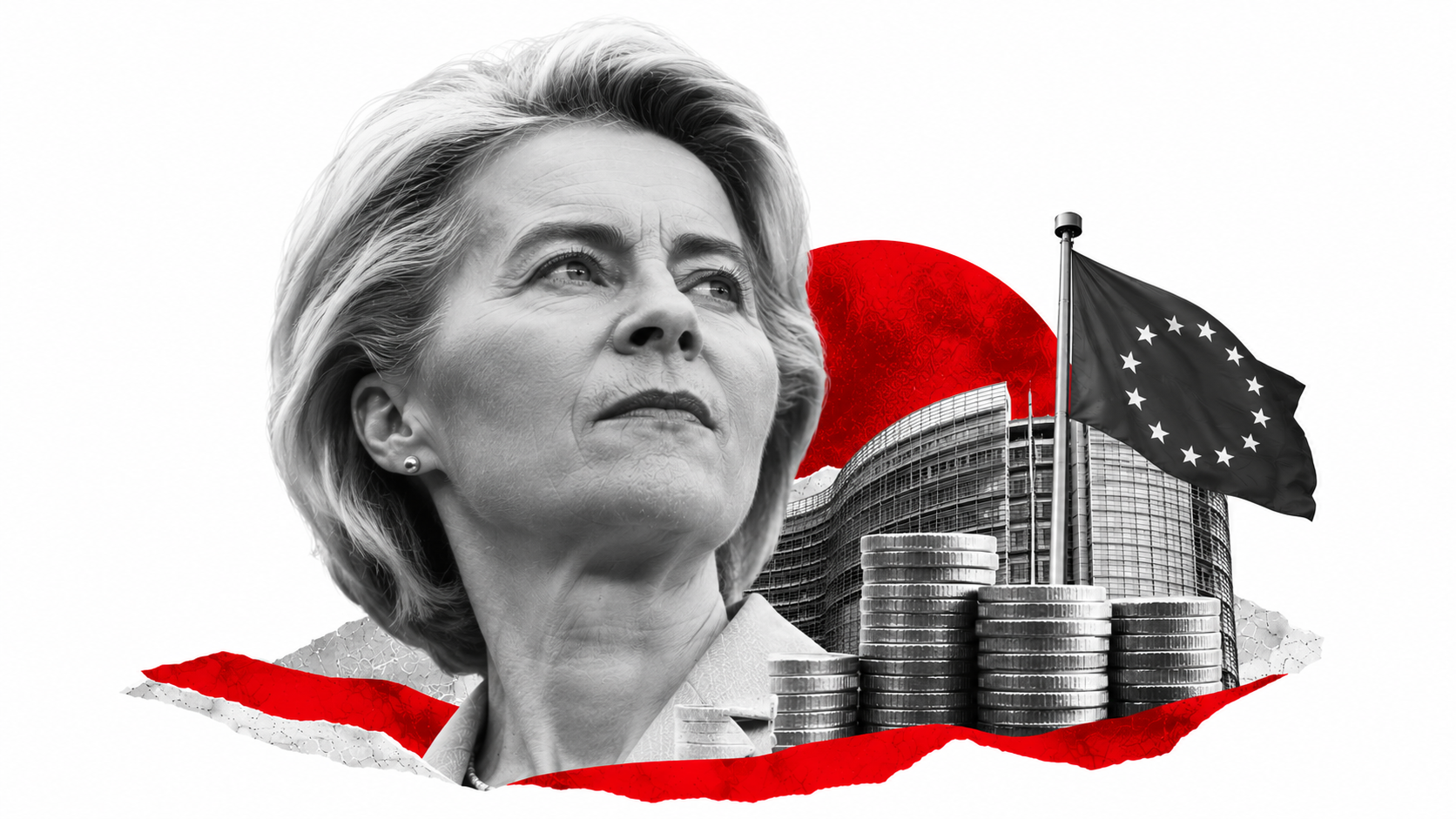
The European Commission is preparing a new financial initiative for Ukraine, but between the political statement and the actual receipt of funds lies a complex path of budget negotiations. While Brussels shows readiness to support Kyiv in the long term, EU member states must agree on funding sources, the distribution of commitments, and decision-making mechanisms. The main question is not how many billions the European Commission is willing to offer, but who will agree to provide them - and when Ukraine will be able to use them.
Between Promise and Commitment
In European diplomacy, wording is as important as numbers. Especially when it comes to tens of billions of euros.
Statements from European Commission President Ursula von der Leyen regarding the preparation of financial decisions for Ukraine in 2027 are often perceived in the public sphere as evidence that the necessary resources are practically secured.
However, there is a fundamental difference between the intention of the European Commission to present a proposal and the final decision on funding.
If a potential package of around €40 billion is involved, its implementation will require determining sources of funds, legal structures, guarantee mechanisms, and agreements among European institutions.
The European Commission has the right to legislative initiative but cannot unilaterally create new debt obligations for the European Union without the appropriate legal authority.
Moreover, not every EU financial instrument requires unanimous approval from all 27 states. The procedure depends on the legal basis of a specific program. Changes to the multiannual financial framework, decisions regarding the Union's own resources, and certain borrowing mechanisms may involve different voting requirements.
Therefore, the assertion that any new issuance of eurobonds automatically requires unanimity would be an oversimplification.
However, the political problem remains: large-scale funding for Ukraine cannot be ensured without adequate support from member states.
The European Commission can propose a financial structure. But a political promise becomes real money only after states agree on the rules for its funding.
Germany and the Price of European Solidarity
At the center of future budget disputes is Germany - one of the largest economies in the EU and a key net donor to its budget.
Chancellor Friedrich Merz advocates for predictable and more evenly distributed support for Ukraine. For Berlin, it is fundamentally important whether all member states are willing to participate in financing common strategic priorities.
Against this backdrop, negotiations regarding the next seven-year budget of the EU for 2028–2034 become particularly significant.
The multiannual financial framework determines the main budget priorities of the EU. Its adoption requires unanimity in the Council of the EU and the agreement of the European Parliament.
Thus, each member state, including Germany, has the power to block the approval of a new framework.
Using this tool as leverage in negotiations regarding Ukraine could significantly raise the stakes. However, reports of specific ultimatums from Berlin and its legal conditions require separate documentary confirmation.
European budget policy is traditionally built on compromises. Countries that are major recipients of agricultural and regional funds are interested in stable financing. Donor states seek to control the growth of common expenditures.
Now, another question adds to these contradictions: to what extent should long-term support for Ukraine become a permanent budgetary commitment of the EU?
Twenty-Seven Capitals - Twenty-Seven Interests
The Slovak and Hungarian governments have repeatedly demonstrated a critical attitude towards specific formats of support for Ukraine. At the same time, the positions of other Central and Southern European states are more complex and cannot be reduced to a simple division between supporters and opponents of financing Kyiv.
The Czech Republic has its own internal political discussions regarding the volume of aid, while Italy is forced to reconcile support for Ukraine with budget constraints and contradictions within the ruling coalition.
However, differing views on the volume, sources, and conditions of financing do not necessarily mean a refusal to support Ukraine as such.
For some governments, military security is a priority. For others - the limitation of common debt, the protection of national budgets, or the preservation of financing for internal programs.
That is why a European compromise may involve not only agreeing on a total amount but also a complex distribution of risks, guarantees, and future payments.
As a result, even a politically supported initiative may require lengthy negotiations.
When Will the Money Actually Arrive?
Time becomes as important a factor as the volume of financing.
The Ukrainian budget needs predictable revenues, not just political agreements on future support.
After the presentation of a financial initiative, negotiations between states, the adoption of relevant acts, the establishment of borrowing mechanisms, and the organization of payments may be needed.
If the program involves attracting funds in financial markets, the conditions for the issuance of debt instruments and the timing of tranches will have additional significance.
However, there is no universal timeframe of five to six months for such procedures. Some EU decisions are implemented more quickly, while others take much longer.
Therefore, the assertion that funds are guaranteed not to arrive before spring 2027 should currently be considered a possible scenario rather than an established timeline.
The greatest risk lies in the gap between the date of Ukraine's budgetary needs and the actual receipt of external financing.
Even if the total amount of aid ultimately proves to be sufficient, delays in individual tranches can create liquidity problems and short-term budget planning issues.
For a state that is financing a war, €40 billion in six months is not the same as €40 billion today.
Civilian Billions and Military Deficit
Another key difference concerns the purpose of international aid.
A significant portion of European macro-financial support programs is aimed at ensuring civilian budget needs: social payments, the operation of government institutions, healthcare, education, and other non-military expenses.
This allows Ukraine to maintain the functionality of the state and direct a larger share of its budget resources towards defense.
However, such aid cannot always be directly used for the purchase of weapons or the financing of military operations.
At the same time, it is incorrect to assert that all European financial instruments are exclusively civilian. The EU and its member states also have separate mechanisms for supporting Ukraine's defense needs.
The problem lies elsewhere: macro-financial assistance and military supply operate under different rules and rely on different resources.
Even the complete coverage of civilian budgetary needs does not guarantee sufficient supplies of air defense missiles, artillery ammunition, or military equipment.
Money is necessary for the resilience of the state. But defense capability also depends on production capacities, logistics, human resources, and the willingness of partners to provide long-term military supplies.
Financial Diplomacy Amid Peace Negotiations
Statements by von der Leyen regarding continued support for Ukraine have not only a budgetary but also a diplomatic dimension.
The European Union seeks to maintain influence over shaping the future security architecture, especially against the backdrop of American diplomatic contacts regarding a possible resolution of the war.
For Brussels, long-term financing for Ukraine is also a way to demonstrate that Europe remains an independent participant in the process.
However, the assertion that the financial statements of the European Commission are merely an attempt to increase its own political weight would be overly simplistic.
The EU has direct economic and security interests in Ukraine. The financial stability of Kyiv affects regional security, migration processes, European markets, and post-war recovery prospects.
At the same time, the diplomatic significance of the statement does not eliminate the need to ensure its practical implementation.
The European Commission can demonstrate political determination, but the persuasiveness of this position will ultimately depend on the actual decisions of member states.
2027: The Reality Check of Promises
Financial support for Ukraine is gradually shifting from emergency decision-making to the necessity of multi-year planning.
This is a more complex stage.
The first aid packages could be justified by exceptional circumstances. In contrast, long-term commitments require stable sources of financing, political agreement, and a clear distribution of costs.
By 2027, the European Union will face three interrelated tasks: ensuring timely money transfers to Ukraine, coordinating financing mechanisms among member states, and linking support for Kyiv with the increase in its own defense expenditures.
Success will depend not only on the decisions of the European Commission but also on the ability of European governments to agree on common priorities.
Therefore, reports of the preparation of a new financial package should not be perceived as either a guarantee of its implementation or as evidence of an inevitable failure.
This is the beginning of a political and budgetary process, the outcome of which still needs to be determined.
European support for Ukraine is measured not by the sums that politicians are willing to announce but by the funds that states have agreed upon, raised, and transferred in a timely manner.
It is here that the line between diplomatic rhetoric and financial reality is drawn.
Ursula von der Leyen may present a convincing plan. The European Commission may propose a complex system of borrowing and guarantees. State leaders may confirm political solidarity with Kyiv.
But the final answer will not come from press conferences in Brussels but from legal decisions made, budget schedules, and actual tranches disbursed.
After all, in international financial politics, there is a simple distinction that is often concealed by diplomatic language: offering €40 billion does not yet mean having €40 billion ready for disbursement.

Read also