Fossil Whale Scaphokogia huachafo Reveals Most Asymmetrical Skull Among Mammals

A Newly Identified Fossil Whale Species
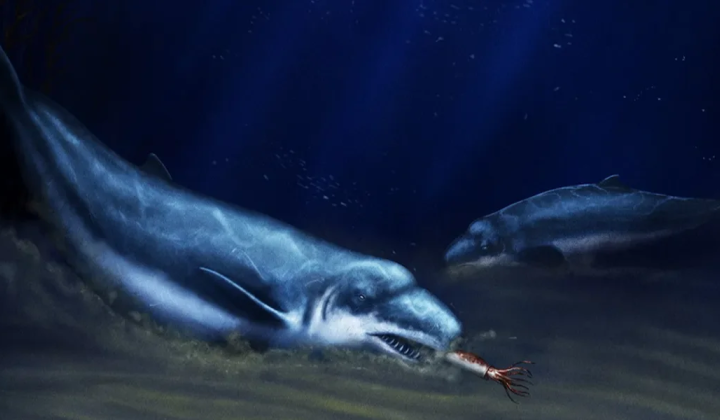
According to НВ — Техно: Scientists have introduced a new fossil whale species named Scaphokogia huachafo, which lived around 6 million years ago. This species stands out for possessing the most asymmetrical facial structure ever recorded among whales, and potentially the least symmetrical skull among all mammals known to date.
Distinctive Traits of Scaphokogia huachafo
A striking feature of Scaphokogia huachafo is the extreme displacement of its nasal passages, with its nostrils located exclusively on one side of the snout. This unusual skull asymmetry created space for echolocation organs and the emission of underwater sound signals. Equipped with a highly developed echolocation system, Scaphokogia huachafo was likely able to hunt efficiently at great depths where sunlight barely penetrates.
Modern sperm whales also exhibit a noticeably curved skull profile, an evolutionary adaptation to accommodate echolocation structures. The fossil remains of Scaphokogia huachafo were studied by paleontologists, with their findings published in the journal Nature. Research on this species opens new avenues for understanding whale evolution and their specialized adaptations to aquatic environments.
The discovery of Scaphokogia huachafo significantly enhances scientific knowledge by shedding light on how whales adapted to extreme underwater conditions. Examining the asymmetry of its skull and echolocation abilities offers valuable insight into evolutionary developments shared with other marine mammals. This finding highlights the critical role of paleontological research in uncovering the history of biodiversity and evolutionary processes on Earth.
In addition to the remarkable findings about new fossil marine species, the evolutionary adaptations observed in Scaphokogia huachafo highlight the intricate relationships between ancient marine life and their ecological roles. This underscores the importance of paleontological studies in unraveling the complex history of biodiversity on our planet.

Read also