The world's first AI system identifies ancient Chinese plant seeds

Innovative Archaeological System APSNet
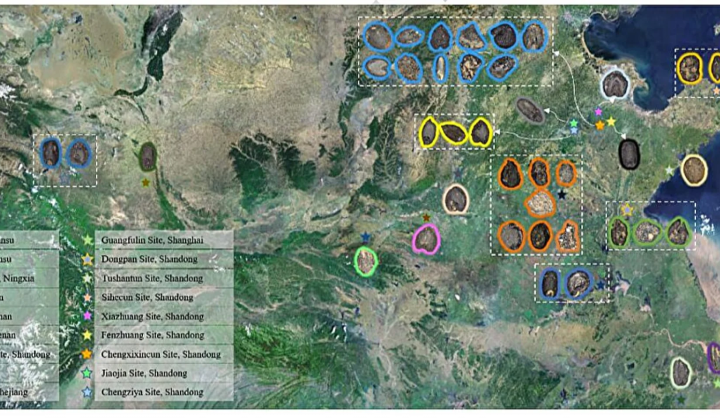
According to НВ — Техно: Linnan University and Shandong University jointly created the world's first archaeological system with artificial intelligence (AI) for identifying ancient Chinese plant seeds. This system, known as APSNet, achieves a classification accuracy of 90.2% and uses the APS database, which contains 8340 images of seeds from 18 archaeological sites in China. The samples in this database date from approximately 5400 BC to 220 AD, spanning over 5000 years of history.
APSNet mimics the identification process of archaeobotanists who study plant seeds. The research group gathered images of 17 representative categories of ancient plant seeds, including:
- barley (Hordeum vulgare L.)
- wheat (Triticum aestivum L.)
- foxtail millet (Setaria italica (L.) P. Beauv.)
- common millet (Panicum miliaceum L.)
- peach stones
Compared to 28 major models of image classification based on AI, APSNet outperforms the strongest existing model by 5.3 percentage points in classification accuracy.
“Plants grew in different historical periods and environments, and the excavated seeds may also have undergone physical changes during extended storage. As a result, even seeds of the same species can vary significantly in size and appearance. Additionally, different plant species may have very similar shapes and surface textures, making accurate classification especially challenging.”
Professor of Computational Intelligence J.K. Lee, Sem Kwon Tak-woo, and Professor Cung Runmin from the School of Science and Technology Management at Shandong University
Thus, the new archaeological system APSNet not only improves the accuracy of identifying ancient plant seeds but also integrates artificial intelligence, archaeology, and the preservation of cultural heritage, opening new opportunities for the exploration and preservation of China's historical heritage and other regions.
Importance of the Development for Science
This development is significant not only for archaeology but also for the study of agronomy and botany. It can help researchers better understand the evolution of plants and their use in human history. Moreover, the introduction of AI in this field opens new opportunities for automation and enhancing research efficiency, which can lead to significant discoveries in the study of ancient civilizations. Considering the growing role of technology in science, such systems may become a new standard in archaeological research worldwide.

Read also