Human Head Carving and Salmon Symbol Unearthed at 1200-Year-Old Aberlemno III Monument in Scotland

Discoveries at the Aberlemno III Monument Excavation
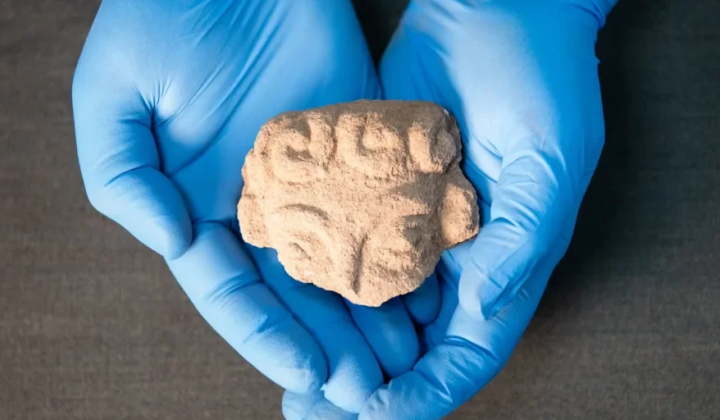
According to НВ — Техно: Following a severe storm, archaeologists excavating the 1200-year-old Pictish monument known as Aberlemno III in Angus, Scotland, uncovered a carved human head and a fragment of an older stone featuring a salmon symbol. Their findings also suggest the monument’s original orientation was altered over time. These revelations were officially announced on November 6 at 18:04.
The storm inflicted damage on the Aberlemno III monument, prompting detailed archaeological investigations. Among the items uncovered was a carved human head, notable for its detailed facial features and curled hair. Additionally, a stone fragment bearing a salmon motif-likely repurposed as part of the monument’s foundation-was found. The Picts, who inhabited northern and eastern Scotland during the early medieval era, are renowned for their stone carvings depicting animals, abstract symbols, and Christian iconography.
Insights from the Findings
The newly discovered elements beneath the monument's base hint that vertical stones may have originally been positioned differently. Evidence indicates Aberlemno III may have initially faced north to south, oriented towards Aberlemno Church, before being reoriented to an east-west alignment. Historic Environment Scotland (HES) led the excavation, and ongoing analysis of the monument’s foundational stone is underway in Edinburgh.
Researcher Stefan North-Saggrott commented, 'The excavation has revealed far more information than initially anticipated.'
These discoveries represent a significant advancement in understanding Pictish culture and their architectural customs. Earlier in 2024, archaeologists at Burghead Fort in Scotland also uncovered a Pictish ring over 1000 years old, adorned with garnet or red glass, found by a volunteer on the final day of excavation. Such findings emphasize the vital role archaeological work plays in preserving and interpreting Scotland’s rich historical heritage.
Studying the Aberlemno III monument offers valuable insights into the Picts’ social and religious life. The shift in the monument’s orientation could reflect changes in cultural or spiritual practices within the community. Alongside discoveries like the Burghead ring, these artifacts continue to deepen our understanding of Scotland’s ancient past and highlight the importance of archaeological research in uncovering the stories of early medieval societies.
The recent discoveries at Aberlemno III highlight the ongoing significance of archaeological research in Scotland. In a similar vein, an anonymous donation of ancient weaponry from a Vandal burial was recently unearthed, providing further insights into the region's rich historical tapestry. Such findings not only deepen our understanding of past civilizations but also emphasize the importance of preserving cultural heritage.

Read also