Anonymous Donation of 2,000-Year-Old Vandal-Era Weaponry Unearthed from Cremation Burial to Museum

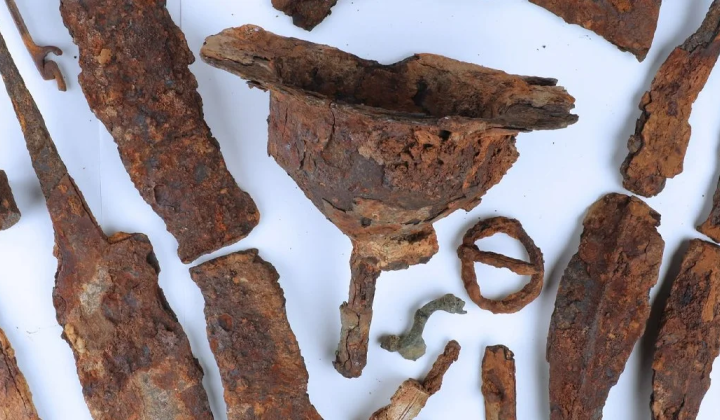
Weapon Collection Handed Over to Museum
According to НВ — Техно: A collection of weapons and personal items, believed to originate from a 2,000-year-old cremation burial dating back to the Vandal period, has been anonymously donated to the Father Stanisław Staszic Museum in Hrubieszów, eastern Poland. The assortment includes:
- a sword preserved in three pieces along with parts of its scabbard;
- two bent and broken spearheads;
- a spear tip;
- a spiked shield boss;
- a shield handle;
- a knife fragment;
- a belt buckle;
- two spurs;
- bone comb fragments;
- a bronze fibula.
Condition and Historical Significance of the Artifacts
The burial site these artifacts come from was discovered several years ago in an agricultural field, though its exact location and discovery circumstances remain undisclosed. Since these items were not recovered through controlled archaeological excavations, their original context has unfortunately been lost. Many of the objects appear to have been deliberately damaged or subjected to burning during the cremation ritual. The presence of weapons and equestrian gear strongly suggests the grave belonged to a warrior or someone of high social rank. The pair of spurs further indicates connections to horseback riding or combat.
The artifacts are currently in poor condition and require specialized restoration efforts. Such conservation work will help stabilize the metal components and enable experts to examine manufacturing techniques and usage details. Earlier, in the summer of 2026, a bronze sword estimated to be around 2,700 years old was legally discovered in northern Poland by amateur archaeologist Marcin Wiśniewski in the Gdańsk forest district. This sword dates back to the Late Bronze Age (circa 900–700 BCE) and is a notable example of ancient metallurgy.
This recent anonymous gift highlights the critical importance of preserving archaeological finds for historical research. Restoration projects not only safeguard fragile relics but also provide valuable insights into the customs and cultures of ancient peoples. Events like this encourage greater public interest in archaeology and history, which plays a vital role in protecting and appreciating cultural heritage. Discoveries such as these offer essential perspectives on the social hierarchies and military traditions of bygone eras.
The recent discovery of ancient weaponry highlights the ongoing significance of archaeological finds in uncovering our past. Similarly, a recent restoration of a 3,000-year-old gold artifact in Germany has revealed intricate construction techniques, shedding light on the advanced craftsmanship of ancient civilizations. Both cases emphasize the importance of preserving historical artifacts for future generations.

Read also