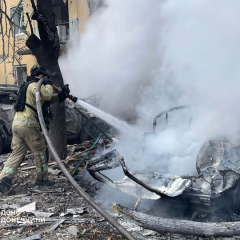
Under the Strikes: Zheleznyak Assesses the Protection of Ukrainian Business


In 2026, Russia intensified its strikes on Ukrainian businesses, particularly warehouses, logistics, and the food industry. The problem is already going beyond individual enterprises, creating risks for supply and prices, as Ukraine has lost 400 thousand square meters of warehouses due to Russian strikes. This was reported by MP Yaroslav Zheleznyak.
Insurance Against Military Risks Has Not Become Widespread for Business
According to Zheleznyak, the losses of the Ukrainian private sector from Russian attacks are estimated at $7-17 billion. Businesses located in Kyiv, Dnipro, Odesa, Zaporizhzhia, and other regions that were previously considered relatively far from the front are under attack.
After a series of attacks on warehouses, the government discussed with retailers and logistics companies the provision of state premises, lending, and insurance against military risks. However, according to Zheleznyak, only about 400 enterprises have joined the state insurance program.
The program operates through the Export Credit Agency. The maximum compensation currently stands at 30 million UAH. In March, the government has already tripled the insurance payments - previously, the maximum compensation amount was 10 million UAH.
«The main figure is 400. Not 400 thousand, not 40 thousand, 400. So the program theoretically exists, but there is simply no business in it,» Zheleznyak emphasized.
According to him, 30 million UAH can be significant support for small or medium-sized enterprises, but this is not enough for large logistics centers and production facilities, the cost of which is significantly higher.
What Zheleznyak Proposes to Change for the Protection of Business
The MP believes that the state needs to raise the insurance coverage limits for large enterprises, provide separate funding for payouts in the budget for 2027, and encourage companies to independently reduce military risks.
This includes, for example, lower insurance costs for enterprises that build shelters, train staff, disperse warehouses, or invest in other means of protection.
«It should be that you built a shelter, trained personnel, dispersed warehouses, even installed private air defense, and we have such a thing, then you pay less,» Zheleznyak explained.
A separate problem remains the speed of obtaining assistance. Tax incentives, in the deputy's opinion, do not address the main need of enterprises after a strike - quickly obtaining money to restore operations. The register of damages is also primarily intended for future compensation.
For businesses, it is critically important to document destruction immediately. Without proper documentation of damages, companies will find it harder to claim compensation in the future.
In light of new Russian attacks, the issue of insurance is becoming increasingly urgent. It should be reminded that the National Bank is already discussing how to strengthen the insurance protection of businesses against military risks after large-scale strikes on warehouses and logistics centers.

Read also