Saharan Dust Blankets Canary Islands Nearly Half the Year

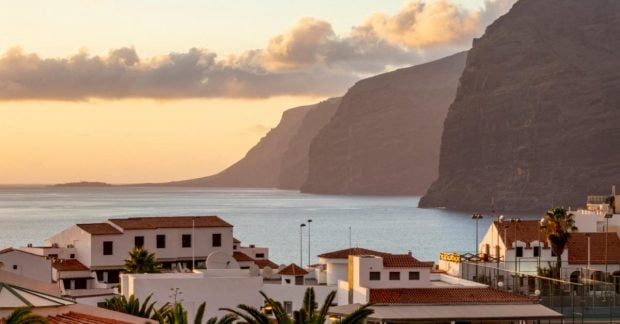
Health Threat on the Canary Islands
According to УНІАН — Туризм: A growing health hazard is emerging in the Canary Islands due to Saharan dust, known locally as calima. This phenomenon now occurs at least 146 days annually-roughly 40% of the year. A study conducted by the Paul Scherrer Institute (Switzerland) and the Spanish Institute of Environmental Diagnostics and Water Research (IDAEA-CSIC) found that desert dust levels have risen by 10–25% over the past decade. The highest pollution concentrations have been recorded on the island of Gran Canaria.
Tourists and expatriates have been warned about this dangerous weather event, as during dust storms, PM10 particle concentrations can reach between 200 and 400 micrograms per cubic meter. In extreme cases, this figure has surged to 600–1,840 micrograms per cubic meter, raising serious concerns. In mainland Spain, Saharan dust is present roughly 35% of the year in the south and 25–30% in the northeast. Between 2020 and 2022, the region experienced unprecedented super-calima events, further underscoring the severity of the situation.
Impact on Public Health
The study's alarming findings indicate that doctors have observed worsened treatment outcomes in heart failure patients after dust exposure. Research also shows that in 2025:
- 33% of people aged 15–24 will suffer from eco-anxiety;
- 39% of people aged 25–34 will also face this issue.
Among those experiencing severe eco-anxiety, 8% are aged 15–24, and 10% are aged 25–34. Overall, 5% of people across all age groups report very high levels of eco-anxiety.
Scientists attribute the sharp increase in such events to climate change. Air quality experts emphasize the urgent need for attention, as more frequent dust storms could have negative health consequences. Medical professionals recommend protective measures against dust exposure, especially for vulnerable populations.
This situation on the Canary Islands reflects global trends linked to climate change and its impact on human health.
The elevated air pollution caused by Saharan dust poses a threat not only to local residents but also to tourists visiting the region. Given forecasts of further increases in dust storm frequency, it is crucial for local authorities and healthcare institutions to take necessary steps to safeguard the health of both citizens and visitors.

Read also