American Man Sees His Cat Luna’s Features on People’s Faces After Brain Surgery, Scientists Investigate

An Uncommon Visual Disorder
According to НВ — Техно: At 28 years old, an American named Carl began noticing the facial characteristics of his cat Luna appearing on the faces of others following brain surgery. This visual anomaly has persisted for two years and is linked to damage in the right temporal lobe of his brain. Researchers from Dartmouth College and Brigham and Women's Hospital are studying this rare phenomenon, which highlights how memories can shape real-time visual perception, explains neuroscientist Brad Duchaine.
Surgery and Its Aftereffects
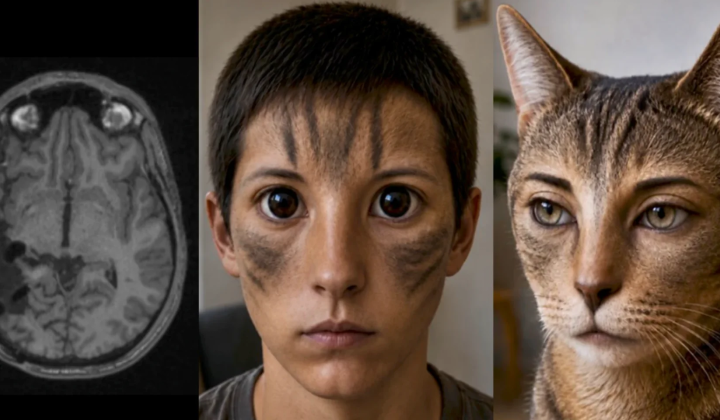
Carl underwent a surgical procedure to remove an abnormal cluster of blood vessels in his brain, during which part of the tissue in his right temporal lobe was excised. This brain region plays a crucial role in recognizing human faces. As a result of the damage, Carl now perceives people's faces as distorted; although they appear whole, their features shift depending on the viewing angle and distance. This condition is known as prosopometamorphopsia.
Working with scientists, Carl used artificial intelligence to recreate images representing his visual experience. Similar distortions have been documented in medical literature-for instance, a 1986 Cortex journal article described a 58-year-old woman who, after a stroke, saw poodle-like faces on bus passengers. Her condition also involved difficulty recognizing familiar people and even her own home.
Notably, these animal-like traits seem to manifest exclusively on human faces, not on objects such as trees or furniture. Carl’s case offers fresh insights into how facial perception is intertwined with memory processes.
"This case not only highlights the uniqueness of individual perception but also emphasizes the importance of studying the neurobiological foundations of how we see." - Brad Duchaine
Understanding how brain injuries alter visual perception may pave the way for innovative treatments and rehabilitation strategies for patients experiencing similar disorders. Investigating such extraordinary cases also broadens our comprehension of the complex link between memory, perception, and emotional experience-key areas in neuropsychology.
This intriguing case raises questions about how our brain processes facial recognition, similar to findings in other studies. For instance, recent research has shown that neurons shift between conscious and suppressed perceptions of faces approximately 15 times per second. Understanding these dynamics may shed light on the complexities of visual perception and its relation to neurological health.

Read also