The Beer Front of European Geopolitics: A Fake Prime Minister and a Real Problem of Defense Economics
A Prime Minister That Doesn’t Exist
A story is circulating on social media about a Latvian politician who supposedly urged Europeans to drink less beer to save lives. It has all the elements needed for a viral headline: a politician, alcohol, war, and a moral obligation. Only the reliable confirmation of the statement is lacking. However, behind this informational curiosity lies a more serious question: why does the European discussion about defense so easily turn into a conversation about personal consumption when real problems lie at the level of factories, contracts, and industrial policy?
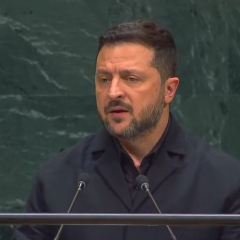
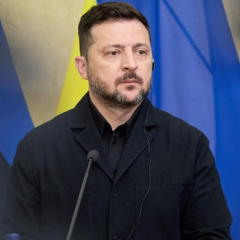
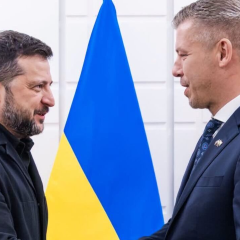
European geopolitics has received an unexpected new front-a beer one. Quotes are circulating on Telegram channels and social media that are supposedly attributed to the Prime Minister of Latvia, Andris Kulbergs. According to this version, the politician urged Europeans to reduce their beer consumption, linking such restraint to the saving of human lives.
The story sounds so absurd that it almost perfectly adheres to the laws of the modern information market. A European politician suggests drinking less to help Ukraine. The public is outraged, commentators are ironic, and social media algorithms reward authors with another reason to mock Brussels.
The problem begins with the first fact. Andris Kulbergs is not the Prime Minister of Latvia. He is known as a Latvian politician and a member of the Saeima. The head of government is Evika Silina. This mistake alone calls into question the reliability of the information, and without an original source, full context, and verified account of the speech, the quote attributed to Kulbergs cannot be considered an established fact.
The mechanism of spreading such stories is well-known. A real person is attributed a higher position, an ambiguous or fabricated phrase is turned into a categorical call, and a complex political issue is reduced to domestic absurdity. As a result, the discussion about European security begins not with defense budgets or production capabilities, but with a mug of beer.
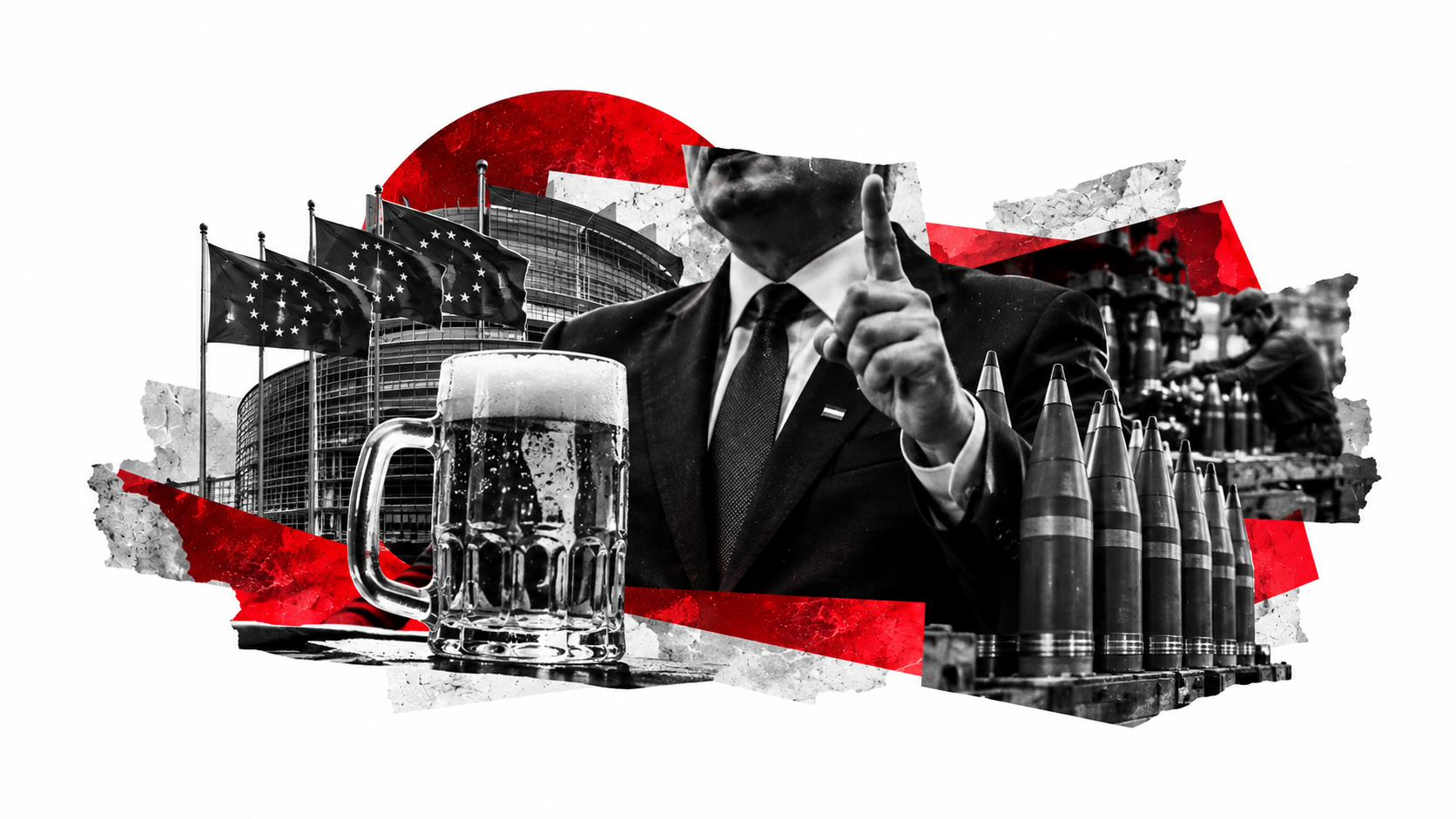
A Mug of Beer vs. an Artillery Factory
Calls to limit personal consumption for the sake of a public goal have a long political history. During major wars, states used rationing of products, resource-saving campaigns, and voluntary donations. In certain circumstances, such measures indeed helped mobilize finance and material resources.
But there is a fundamental difference between the economy of total mobilization and the modern European market. Reducing beer consumption does not automatically turn into extra artillery shells, anti-aircraft missiles, or armored vehicles. A mechanism for redistributing funds, appropriate state purchases, and industrial capacities capable of fulfilling orders is necessary for that.
Even if Europeans massively refused an extra pint of lager, it would not solve the problem of ammunition production. Breweries cannot quickly transform into missile engine manufacturing facilities, and aluminum cans are not the main limitation for the European military-industrial complex.
The main deficit of European defense is not consumer restraint of citizens but the ability of states to convert financial resources into serial production of weapons. And this problem is significantly more complex than any campaign for personal saving.
Actually the Prime Minister. And the Quote is Not Made Up
However, checking the original sources alters the initial picture. Andris Kulbergs does indeed lead the government of Latvia: on May 28, 2026, the Saeima approved the cabinet of ministers he formed with 66 votes after the resignation of Evika Silina. Thus, the statement about a 'fake Prime Minister' does not correspond to the current political situation.
And the beer analogy itself does not appear to be fabricated. On October 15, the Spanish publication 20minutos, whose journalist covered the EU summit in Brussels, reported that Kulbergs urged Europeans to donate the cost of one mug of beer for the sake of helping Ukraine. In content, it was a call to increase financial support, not a statement that reducing alcohol consumption will directly ensure weapons production.
This is a significant difference. The politician used a familiar everyday comparison to show the relative cost of assistance for European citizens. On social media, such a metaphor can easily be turned into a caricature: supposedly European governments are proposing to replace the military industrial complex with sobriety.
Shells Are Not Made from Political Metaphors
The European defense industry indeed faces structural limitations. The European Commission has directly named the production of explosives, gunpowders, and nitrocellulose-based components, the shortage of qualified workers, access to financing, and the complexity of permitting procedures among its bottlenecks.
The EU is already trying to address these issues. The ASAP program supports expanding production capabilities in the ammunition sector, including the production of gunpowder, explosives, and artillery shells. The European benchmark is an annual production capacity of about 2 million 155mm artillery shells. However, production capacity does not equate to actual output, and output-timely delivery to the front.
Long-term contracts are no less important. A defense factory cannot infinitely ramp up production solely based on political declarations. New lines, personnel, equipment, and raw material stock require predictable orders years in advance. Without this, even substantial budget increases do not guarantee proportional growth in supplies.
This is the economic paradox of European defense. The continent has the financial resources to support Ukraine, but money does not instantly convert into rockets and ammunition. Between the decision to allocate funds and the appearance of ready weapons lies an industrial cycle that cannot be shortened by a single political speech.
How Much Does One Mug of Solidarity Cost?
Kulbergs' beer metaphor has a clear political goal: to explain to voters that assistance to Ukraine is an affordable financial commitment for a significantly larger European economy. However, it does not answer the more complex question-how effectively these funds are converted into military capabilities.
This is where the line between political communication and defense economics lies. The former requires a short phrase that journalists will remember. The latter requires contracts, production lines, raw materials, engineers, and stable supply chains. Both are necessary, but neither can completely replace the other.
European governments will indeed have to explain to citizens the price of sustained support for Ukraine. However, the success of this policy will be determined not by the willingness of society to give up a symbolic mug of beer, but by the ability of states to ensure predictable funding and the scaling of defense production.
One mug of beer can serve as a successful metaphor for European solidarity. But for victory, a metaphor is not enough; an industry capable of working faster than war is required.

Read also