Russian General Admits Shelling a Church, Killing a Woman and Child in Donbas

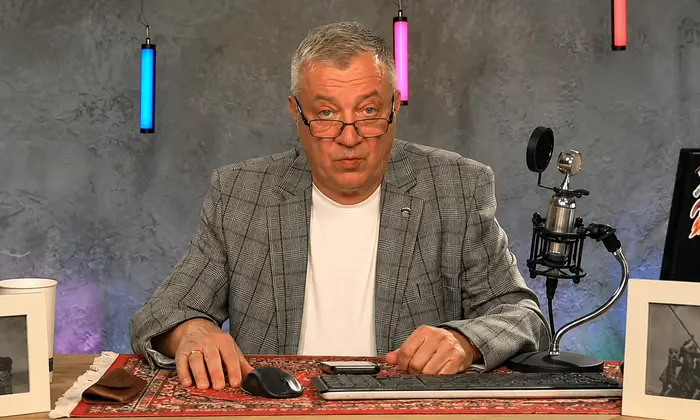
Gurulev’s Admission About Events in Donbas
According to Главком: Andrey Gurulev, a Russian State Duma deputy and general, has acknowledged that in 2014, Russian military shelling in the Donbas region killed civilians, including a woman and a child who were inside a church. This confession emerged as a significant moment in his public remarks about the conflict in eastern Ukraine. Gurulev, who commanded Russian forces in adjacent areas roughly 12 years ago, stated that Ukrainian troops had positioned four tanks near the church, which he cited as the reason for his decision to strike the armored vehicles.
“Twelve years ago, I once visited a church. In the neighboring area, I approached the priest. Father, how are things? And he said: we were bombed here, there was shooting, a woman and child died. I said: Listen, I did that.”
Andrey Gurulev
He also noted that he did not apologize to local residents, emphasizing that 'people need to know the truth.'
Calls for Further Attacks
In addition, Gurulev urged strikes on civilian infrastructure in Ukraine’s capital, specifically targeting railway stations, water supply, electricity, and sewage systems. He stated:
“In Kyiv? In Kyiv. So that there is no train station in Kyiv, nowhere to arrive. So that not a single locomotive moves. So that there is no water, no light, no sewage-nothing at all.”
Andrey Gurulev
These comments by Gurulev have sparked significant public and international outcry, as they touch on both historical events and the current situation in Ukraine. Meanwhile, Russian authorities continue to recruit new soldiers through one-time payments for signing contracts, indicating an ongoing mobilization effort.
Gurulev’s acknowledgment of civilian deaths in Donbas during a Russian military shelling could become a crucial element in the international context, as it confirms the existence of civilian casualties in the conflict. Furthermore, his calls for new attacks on civilian infrastructure raise concerns about further escalation in Ukraine and potential consequences for the civilian population. These events highlight the complex and tense situation persisting in the region and its impact on international relations.
As the situation in Ukraine continues to evolve, the toll on civilians remains a pressing concern. Recent statements from officials, including the Kursk governor, shed light on the increasing number of civilian casualties, highlighting the grim realities faced by those caught in the crossfire. This context adds weight to Gurulev's controversial admissions and underscores the ongoing humanitarian crisis in the region.

Read also