Ukrainian Drone Strikes, Sanctions, and Vostok Oil Setbacks Deal Heavy Blows to Rosneft

Challenges Confronting Rosneft
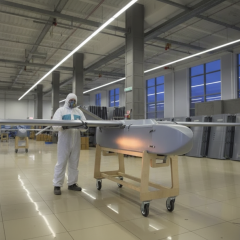
According to ХВИЛЯ: Russia’s largest oil producer, Rosneft, is grappling with a series of significant obstacles stemming from intensified Ukrainian drone attacks on its refineries, international sanctions, shrinking profits, and mounting debt. Since the start of the year, Ukrainian drones have targeted Russian refineries at least 114 times-double the number recorded during the same period last year. Rosneft owns 12 refineries that account for roughly one-third of Russia’s refining capacity.
In September, Rosneft’s CEO Igor Sechin requested President Vladimir Putin’s approval to load the first tanker at the Vostok Oil terminal. Putin granted the permission, stating:
“Approval has been given.”
Setbacks at the Vostok Oil Project
The ambitious Vostok Oil initiative, backed by nearly $50 billion in investments, is falling behind schedule and failing to meet its expected production targets. Most of the crude supplied to the Arctic network is sourced from mature fields, while new deposits in the Paiakhskaya group contribute less than 5% of output prior to the terminal’s launch. According to Rystad Energy forecasts, Vostok Oil’s production will reach approximately 310,000 barrels per day by 2027, with 90% coming from the Vankor cluster. By 2030, output may rise to 440,000 barrels daily-far below the one million barrels per day promised by Sechin.
As Ukrainian drone attacks escalate, Rosneft struggles to safeguard its refineries. In September alone, the company faced 15 strikes, five of which targeted major facilities. The Ryazan refinery has operated at reduced capacity for over half the time since its first assault in May, while the Syzran refinery has run at less than one-third capacity for six months. The Tuapse refinery has been offline since April.
Despite efforts to protect its sites with container systems, nets, and cables, Rosneft has been unable to effectively defend against drone incursions. Repairing critical units such as catalytic cracking, reforming, and hydrocracking has become increasingly challenging as spare parts from Western suppliers are no longer available. The company now relies on Russian-made copies and imports from China.
Rosneft’s financial performance is also deteriorating. Its net profit for the first half of the year dropped nearly 20% to 200 billion rubles ($2.4 billion). By the end of June 2026, the company’s net debt to EBITDA ratio rose to 1.8-the highest level in over five years. In September, the International Energy Agency downgraded its forecast for Russian refining capacity to about 4 million barrels per day over the next 18 months, marking a 30% decline from pre-war levels.
Qatar’s sovereign wealth fund, holding an 18.46% stake in Rosneft, is closely monitoring the situation as sanctions hinder the construction of specialized tankers for Arctic waters. Russia will need at least 30 such vessels by 2030. Meanwhile, on October 9, 2026, Putin announced a partial easing of the diesel export ban, enabling the U.S. to purchase Russian diesel fuel. Under U.S. pressure, Ukraine has faced temporary restrictions on access to satellite technology and American intelligence.
Ukrainian strikes on refineries have expanded their reach dramatically, with attacks in 2022 occurring up to roughly 650 km from the border, and by July 2026, drones hit the Omsk refinery located 2,500 km away. The Arctic Vostok Oil terminal sits approximately 3,300 km from Ukraine’s border.
Overall, Rosneft confronts a multitude of challenges that threaten not only its operations but also the broader Russian oil and gas sector. As Victor Kurilov remarked,
“Building this project is just one of the many challenges facing the company.”
Sergey Vakulenko added,
“Today, they essentially do not exist,”
highlighting the company’s dire struggles amid current conditions.
This situation with Rosneft mirrors the wider difficulties facing Russia’s oil and gas industry, which is contending with the ramifications of international sanctions and intensifying military conflict. Attacks on refineries disrupt production and jeopardize the company’s financial health. In the context of global energy security and shifting market dynamics, Rosneft’s performance could have significant consequences for the Russian economy as a whole.
The ongoing drone attacks not only impact Rosneft but have also severely affected other major players in the Russian oil industry. For instance, Lukoil's Perm refinery has reported a staggering loss of over 86% of its refining capacity due to similar strikes. This highlights the broader challenges facing Russia's oil sector amidst escalating conflicts and sanctions.

Read also