Ukraine Strikes Five Key Russian Targets Including Nizhnekamskneftekhim and Akhtubinsk Airbase

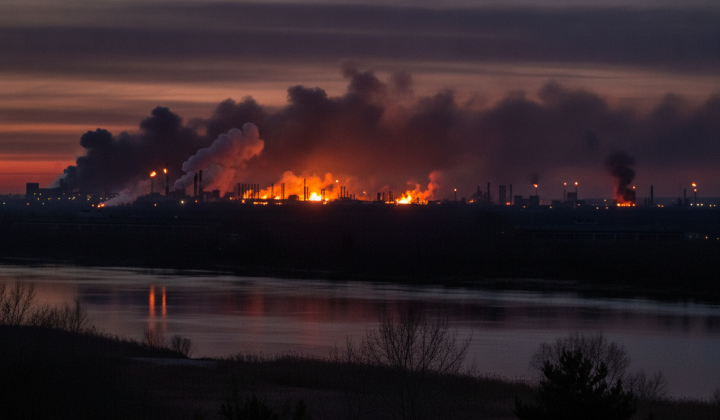
Precision Strikes Hit Russian Facilities Overnight
According to ХВИЛЯ: In the early hours of November 15, Ukrainian Defense Forces launched coordinated attacks on five critical sites within Russian territory. The targeted locations included:
- The Nizhnekamskneftekhim petrochemical complex
- The TAIF-NK refinery in Tatarstan
- The Akhtubinsk airbase in Astrakhan region
- The Monolit manufacturing plant in Bryansk region
- A drone port in Oryol region
Significance of the Targeted Facilities
Nizhnekamskneftekhim ranks among Europe’s largest petrochemical enterprises and serves as a key asset of the Sibur holding. Located over 1,000 kilometers from the Ukrainian border, the plant experienced explosions and a fire following the strike. It produces synthetic rubbers, including polyisoprene and butyl rubber, as well as plastics-materials essential to various military and civilian industries.
The TAIF-NK refinery, known for its deep processing capabilities exceeding 95%, also caught fire. This facility handles heavy, high-sulfur crude oil and gas condensate. Its primary processing unit, the ELOU-AVT-7, was damaged during the assault.
Akhtubinsk airbase, situated about 650 kilometers from the front lines, hosts the Russian Ministry of Defense’s 929th State Flight Test Center and is home to Su-34 fighter-bombers. The attack triggered a massive secondary explosion at a storage site containing components for guided aviation missiles. Additionally, a mobile PRV-13 radio altimeter was destroyed. Monitoring group Exilenova+ recorded at least 30 explosions in the vicinity of the airbase.
The Monolit factory in Trubchevsk, Bryansk region, manufactures aircraft, including helicopters, along with parts and metalworking products. The drone port at Tsymbulova, Oryol region, serves as a storage, preparation, and launch site for strike UAVs. Ukrainian drones also reportedly attacked a bridge and two power substations in Taganrog during the night, though the Ukrainian General Staff has not confirmed these strikes.
The Ukrainian General Staff emphasized, “Though these chemical facilities may appear peaceful at first glance, their products are indispensable for any military force: synthetic rubber is used to produce tires for military trucks, armored vehicles, and aircraft, as well as seals, hoses, and technical rubber goods.”
These targeted strikes on strategic Russian infrastructure highlight Ukraine’s ongoing active military efforts to disrupt supply chains critical to Russia’s war operations. The damaged plants and airbases play vital roles in Russia’s defense capabilities, so impairing them could significantly hinder the Russian military’s operational sustainability. The attacks also demonstrate Ukraine’s advancing technological proficiency, particularly in utilizing drones and other modern offensive systems.
The General Staff further noted, “Every hour these plants are offline means fewer tires for vehicles transporting ammunition to the front, fewer rubber components for armored and aviation equipment, less raw material for missile production, and reduced fuel supplies for the Russian army.”
As the situation escalates, Ukrainian forces continue to target significant military and industrial sites within Russia. Following the recent strikes on key facilities, including the Nizhnekamskneftekhim complex, another notable attack occurred at the Morozov factory near Saint Petersburg, where three production workshops were damaged. This pattern of precision strikes underscores the ongoing strategic efforts by Ukraine to disrupt Russian military capabilities. For more details on the impact of these operations, visit the latest updates on the Morozov factory attack.

Read also