How Different Generations Are Shaping HR: Debunking Myths and Offering Practical Guidance for Companies

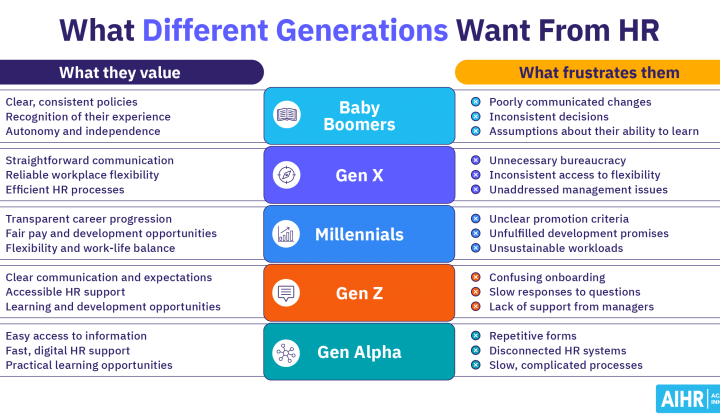
Generational Values and Expectations in the Workplace
According to AIHR: Understanding how various generations perceive HR approaches reveals distinct expectations and core values that HR strategies must address. Tailoring people management to meet the specific needs of each age group is essential for fostering an inclusive and effective work environment. This article explores widespread misconceptions about generational traits at work and provides actionable advice for HR professionals on enhancing communication, flexibility, career growth, and employee engagement across diverse experience levels.
Research by EY shows that 29% of Baby Boomers feel their employers actively invest in their professional development. Supporting this, AARP and LinkedIn data highlight a rise in technology-focused LinkedIn Learning sessions among workers aged 50 and above-from 19.5% in 2022 to an expected 26.6% by 2025-demonstrating a strong commitment to ongoing learning within this group.
In the UK, Generation Z is notably active in the labor market, with 71% eagerly anticipating joining the workforce. However, PwC's research also reveals that 45% of Gen Z experience feelings of overwhelm at least once a week. Meanwhile, Gallup reports a decline in younger employees feeling valued as individuals at work-from 54% in 2020 down to 41% in 2023 among Gen Z and younger millennials.
Distinct Priorities Across Generations
Millennials display diverse career goals: 45% prioritize steady growth, 21% seek rapid promotions, and 20% are open to lateral or even backward moves to gain valuable experience, according to Deloitte. Moreover, 35% believe that improving workplace communication is key to better understanding employee expectations.
Generation X places a high value on reliably scheduled flexibility to accommodate personal and family needs, EY research indicates. McKinsey emphasizes that meaningful work is crucial for this group, with disengaged leadership cited as a common reason for turnover.
Emerging Gen Alpha employees expect digitally accessible HR services, streamlined recruitment and onboarding processes, and mentorship opportunities to develop their professional judgment.
Common myths about generations in the workplace include:
- The false belief that older workers resist adopting new technologies.
- The misconception that Gen Z lacks a strong work ethic.
- The assumption that millennials are always chasing promotions, when many actually prefer stability.
- The underestimation of Gen X’s need for meaningful support and engagement.
To effectively tailor HR strategies for all generations, companies should implement centralized information systems, transparent career paths, clearly defined flexible work policies, open feedback channels, and accessible live support. These measures foster a more productive and supportive workplace for employees with varying backgrounds and needs.
Adapting HR practices to the evolving expectations of multiple generations is vital for cultivating a positive work atmosphere and boosting employee satisfaction. As workforce diversity grows, organizations that innovate in talent management are better positioned to reduce turnover and enhance productivity. In today’s rapidly changing labor market, companies that successfully adjust their HR strategies will gain a competitive edge in attracting and retaining top talent.
Understanding the diverse priorities of different generations is crucial for enhancing workplace dynamics. For companies looking to improve employee satisfaction and retention, exploring effective strategies to boost engagement can provide valuable insights. By implementing tailored approaches, organizations can foster a more motivated and committed workforce.

Read also