NATO Loses US Aircraft Carriers and Submarines as Washington Pulls Forces

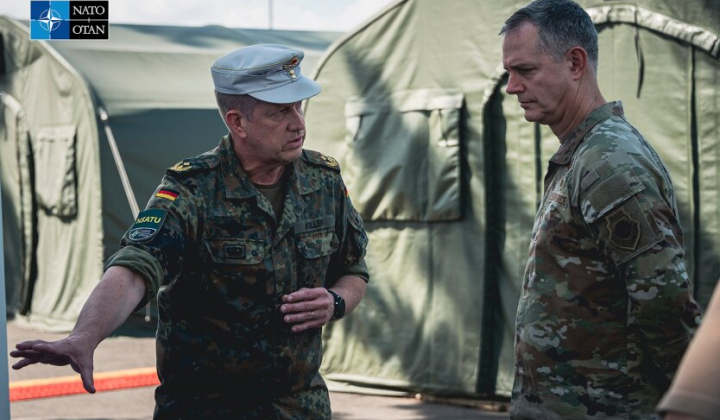
NATO General Alexus Grinkevich Speaks at Berlin Air Show
According to ХВИЛЯ: Speaking at the ILA air show in Berlin, NATO General Alexus Grinkevich stated that Russia has no desire for a conflict with the Alliance. He noted that Moscow 'is not seeking a fight' and fully understands the meaning of the term 'defensive alliance,' emphasizing that NATO possesses 'a range of asymmetric advantages.' However, plans by the United States to reduce the military capabilities it contributes to NATO are causing growing concern among Baltic nations.
Cuts to NATO’s Military Capabilities
These reductions are part of the Donald Trump administration’s broader strategy to shift resources toward Asia and the Western Hemisphere. Specifically, Washington has announced the withdrawal of 5,000 troops from Germany and the cancellation of a long-range missile battalion deployment there. Grinkevich confirmed that the following assets could be removed from NATO’s force structure:
- a U.S. aircraft carrier strike group;
- all cruise missile submarines;
- some Poseidon patrol aircraft;
- aerial refueling tankers;
- F-16 and F-15E fighter jets.
Recently, Vladimir Putin dismissed fears of an attack on NATO countries as 'nonsense' and accused the West of 'deliberate provocation.' Commenting on the situation on the front lines in Ukraine, Grinkevich described it as stable, adding that 'the Ukrainians are holding up quite well.' He went on to say, 'When the Russians advance, they barely move forward, and it costs Russia incredibly high losses.' The general also stressed, 'When I am asked if I am ready to fight tonight-absolutely.'
Grinkevich is actively involved in U.S. efforts to secure a ceasefire between Russia and Ukraine. As head of the U.S. European Command, his role is critical in shaping NATO’s military strategy amid ongoing geopolitical challenges. Sources indicate these issues remain central to regional security, particularly for countries that perceive a direct threat from Russia.
The general’s remarks underscore the delicate balance between Europe’s security needs and shifting U.S. strategic priorities. The reduction in military assets may heighten anxiety among NATO allies, especially given Russia’s active military operations in Ukraine. At the same time, Grinkevich’s assessment of a stable front line in Ukraine suggests that, despite concerns, Ukrainian forces remain capable of resisting Russian aggression. These developments could reshape the future dynamics of NATO-Russia relations and the broader security landscape in the region.
The recent announcements regarding troop withdrawals and military asset reductions raise significant concerns about NATO's readiness. As the situation evolves, understanding the implications of the U.S. troop pullout from Germany becomes increasingly crucial. This shift not only affects the Alliance's defense posture but also highlights the broader strategy of the U.S. in reallocating its military resources amidst growing geopolitical tensions.

Read also