Stalinist Economy: How 'Socialism in One Country' Led to Collectivization and the Holodomor

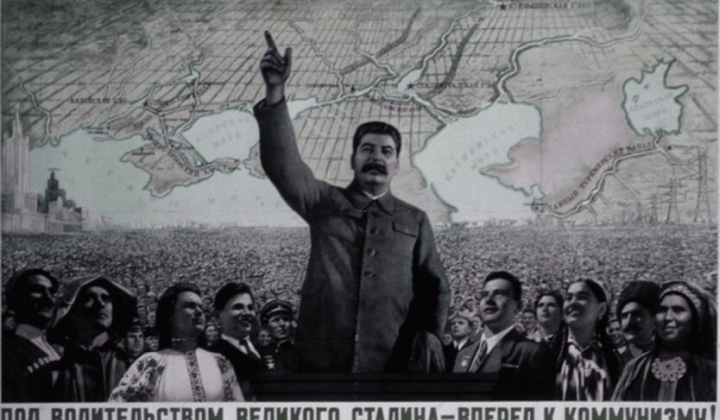
The Role of Joseph Stalin in the Economic Policy of the Soviet Union
According to ХВИЛЯ: In the final episode of the podcast, the role of Joseph Stalin in the economic policy of the Soviet Union is discussed, his concept of 'socialism in one country', as well as the consequences of collectivization and industrialization that led to massive human casualties and changes in society. Stalin, the architect of forced modernization in the USSR, implemented an economic model that reflected not only in the Soviet Union but also influenced the development of China and Eastern European countries.
Collectivization and its Consequences
In 1928, Stalin announced mass collectivization, which became an important stage in his economic policy. This campaign, which lasted in the late 1920s and early 1930s, led to severe consequences, particularly the Holodomor in Ukraine. According to data, collectivization was accompanied by repressions, during which 1.5 million people were arrested, of whom 750,000 were executed. These events became part of the Great Terror, which further intensified the pressure on the population.
The podcast also discusses the confrontation between the concepts of 'socialism in one country' and 'permanent revolution' that shaped the political landscape of the time. As historian Adam Tooze noted:
'We control one-sixth of the planet' - Adam Tooze
This highlights the ambitions of the Soviet leadership. Stalin's economic policy became a significant milestone in the history of the Soviet Union, which drastically altered its social and economic structure but also led to heavy human losses. Stalin's library contained about 20,000 volumes, reflecting his quest for knowledge and influence on global politics during the socialist experiment.
The discussion of Stalin's role in the podcast emphasizes not only his impact on the economic policy of the Soviet Union but also the consequences that these changes had for millions of people. The collectivization and industrialization conducted under his leadership caused widespread casualties and social upheavals that still affect the memories of Ukrainians and other nations that experienced these historical traumas. It is important to consider these aspects to understand the contemporary social and political processes in post-Soviet countries.

Read also